
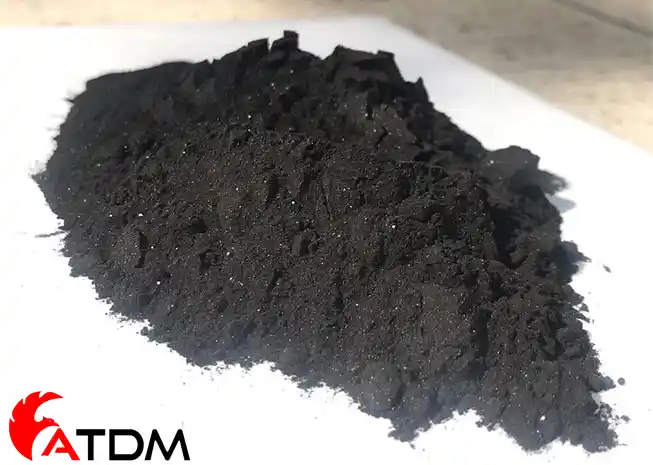
Sulphonated asphalts are chemically modified asphalt products designed to perform where ordinary asphalt fails—especially in demanding oilfield, industrial, and construction environments. By introducing sulfonic groups into the asphalt structure, manufacturers improve water dispersibility, adhesion, and interaction with mineral surfaces. Engineers, drilling contractors, and industrial buyers use sulphonated asphalts when they need stronger fluid loss control, better shale inhibition, or reliable performance in water-based systems.
What Exactly Is Sulphonated Asphalt?
Sulphonated asphalt starts as petroleum asphalt and then undergoes a controlled sulphonation process, usually using sulfuric compounds. This reaction changes the surface chemistry of the asphalt without destroying its core structure.
As a result, the material becomes:
Table of Contents
ToggleMore compatible with water-based systems
Strongly anionic in nature
Highly interactive with clays and shale formations
In practice, this means sulphonated asphalt behaves very differently from paving or roofing asphalt. It acts more like a functional additive than a simple binder.
Why Sulphonated Asphalt Matters in Industrial Use
Standard asphalt works well as a binder, but it struggles in fluid systems or chemically active environments. Sulphonated asphalt solves this problem by offering chemical functionality, not just physical strength.
From field experience, buyers choose this product because it:
Reduces fluid loss in drilling fluids
Stabilizes reactive shale formations
Improves wellbore integrity
Performs consistently in water-based mud systems
For procurement teams, the key value lies in performance stability. Once properly formulated, sulphonated asphalt delivers predictable results across different formations and temperatures.
Common Applications of Sulphonated Asphalts
Oil & Gas Drilling Fluids
This remains the primary application worldwide.
Sulphonated asphalt acts as:
A fluid loss control additive
A shale stabilizer
A plugging and sealing agent
It works by forming a thin, low-permeability filter cake on the wellbore wall. At the same time, it limits clay swelling, which reduces stuck pipe and hole collapse risks.
Water-Based Mud Systems
Unlike gilsonite or raw asphalt, sulphonated asphalt disperses well in water-based fluids. This makes it suitable for environmentally controlled drilling programs where oil-based mud is restricted.
Mining and Geotechnical Fluids
In mining operations, sulphonated asphalt helps control fluid loss and stabilize weak formations during exploratory drilling.
Specialized Construction and Industrial Uses
In some regions, formulators use sulphonated asphalt in specialty waterproofing compounds, grouting systems, or industrial slurries where adhesion to mineral surfaces is critical.
Key Performance Characteristics Buyers Should Know
Water Dispersibility
Sulphonation introduces hydrophilic sites into the asphalt structure. As a result, the material disperses evenly instead of floating or separating.
Strong Anionic Charge
This charge allows the product to interact effectively with clay particles, especially smectite and shale formations.
Thermal Stability
Quality sulphonated asphalt maintains performance across a wide temperature range, which matters in deep or high-temperature wells.
Controlled Solubility
It does not fully dissolve like a polymer. Instead, it forms a stable dispersion that creates physical sealing and chemical interaction at the same time.
Typical Technical Specifications (Indicative)
| Property | Typical Range |
|---|---|
| Appearance | Black to dark brown powder or granule |
| Solubility | Dispersible in water |
| pH (1% solution) | 7–10 |
| Moisture | ≤ 10% |
| Bulk Density | 0.7–0.9 g/cm³ |
Note: Exact values vary by formulation. Buyers should always request a current TDS and COA.
Handling and Storage Insights from the Field
Based on operational experience, most issues with sulphonated asphalt come from poor handling—not product quality.
Best practices include:
Store in dry, covered warehouses
Prevent direct contact with moisture before use
Add slowly to drilling fluids to avoid lumping
Use proper mixing energy for uniform dispersion
When handled correctly, the product shows excellent shelf stability and batch-to-batch consistency.
Quality Standards and Testing Considerations
Although no single ASTM standard defines sulphonated asphalt, reputable suppliers test according to internal QC protocols aligned with oilfield service requirements.
Common quality checks include:
Moisture content
Particle size distribution
Dispersibility tests
Performance validation in standard mud formulations
For buyers, consistency matters more than headline numbers. Always evaluate performance data, not just basic specs.
Common Buyer Questions Answered Clearly
Is sulphonated asphalt the same as gilsonite?
No. Gilsonite is a natural asphaltite, while sulphonated asphalt is chemically modified petroleum asphalt. They serve different roles, even though both appear in drilling applications.
Can it replace polymer fluid loss additives?
In many cases, yes—especially where thermal stability and shale interaction matter. However, final formulation depends on well conditions.
Does it work in high-salinity systems?
Most grades perform well in moderately saline environments, but extreme salinity requires formulation testing.
Limitations You Should Understand
Honest evaluation matters.
Sulphonated asphalt:
Does not fully dissolve like synthetic polymers
Requires proper mixing to avoid agglomeration
Performs best as part of a balanced fluid system, not alone
Understanding these limits helps engineers design better, more reliable systems.
Choosing the Right Grade and Supplier
From a procurement perspective, selecting sulphonated asphalt is not just about price. Buyers should evaluate:
Consistency of sulphonation
Particle size control
Supplier QC documentation
Field performance references
ATDM supplies sulphonated asphalts that meet industrial and oilfield requirements, supported by technical documentation and application guidance when needed.
Final Guidance for Buyers and Engineers
Sulphonated asphalts offer a practical solution when standard asphalt or simple additives fall short. They provide fluid loss control, shale stabilization, and reliable performance in water-based systems—especially in drilling and geotechnical operations.
If your operation faces formation instability, excessive fluid loss, or compatibility limits with oil-based systems, this product deserves serious evaluation. The next logical step is to review detailed specifications, match the grade to your application, and confirm performance through lab or field trials.