
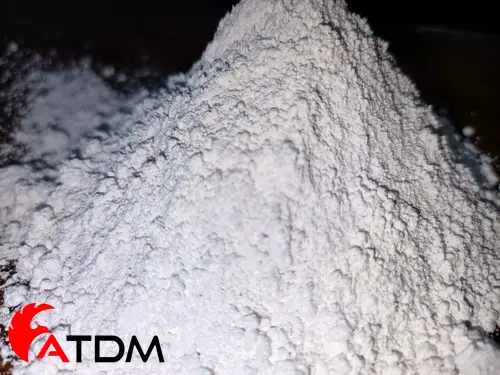
Gypsum is a naturally occurring calcium sulfate mineral widely used in construction, cement production, agriculture, and industrial manufacturing because it offers controlled setting behavior, predictable performance, and cost efficiency. Engineers, manufacturers, and procurement teams rely on this material to regulate cement hydration, produce boards and panels, and achieve smooth, workable plaster products. For industrial buyers, the real value lies in purity, moisture stability, particle size control, and consistent supply not branding or claims.
This mineral consists of calcium sulfate dihydrate, with the chemical composition CaSO₄·2H₂O, commonly referred to as the gypsum formula. Its structure allows water to be released and reabsorbed during heating and setting, which explains its importance in controlled industrial processes.
Manufacturers value it because it:
Table of Contents
ToggleRegulates cement setting time
Improves surface finish and workability
Enables mass production of panels and boards
Delivers predictable results at industrial scale
In practical terms, production stability depends more on quality consistency than on origin.
Finely ground material is supplied as gypsum powder for applications where uniform setting and surface quality matter.
From production experience, buyers typically specify:
Controlled fineness for predictable hydration
Low free moisture to prevent agglomeration
Stable color for decorative or visible finishes
This grade supports plaster products, wall putty, molds, ceramics, and architectural elements.
The construction sector relies heavily on gypsum board manufacturing, where the mineral forms the core layer between paper liners.
Key performance factors include:
Core density and homogeneity
Paper-to-core bonding strength
Moisture resistance in humid conditions
Small variations in core quality can affect board weight, strength, and breakage rates.
Cement producers often purchase crushed material rather than powder. In this case, gypsum used for cement grinding must match mill feed design.
Operational requirements usually include:
Controlled particle size distribution
Low clay and insoluble residue
Stable sulfate content
Inconsistent quality can lead to flash set or delayed setting in final cement products.
In cement manufacturing, gypsum controls the hydration rate of clinker minerals, particularly tricalcium aluminate. Without it, cement sets too quickly for practical use.
From plant-level experience:
Even minor sulfate variation affects setting time
Excess moisture increases handling issues
Uniform grindability improves mill efficiency
That is why cement plants demand strict specification control and reliable documentation.
Experienced procurement teams evaluate material quality using measurable indicators rather than descriptions.
Typical checks include:
CaSO₄·2H₂O purity percentage
Moisture content at loading
Insoluble residue level
Particle size or grindability
Color consistency when relevant
Testing often follows ASTM-aligned internal procedures, particularly for cement and construction applications.
Although stable by nature, this material remains sensitive to poor logistics practices.
Based on real export handling:
Store in dry, ventilated warehouses
Protect bags from condensation during sea transport
Avoid long-term exposure to high humidity
Moisture pickup during shipping is one of the most common causes of customer complaints, even when production quality is acceptable.
This mineral supports a wide range of industries:
Cement and clinker grinding
Drywall and panel manufacturing
Decorative plaster and molding
Ceramic mold production
Agricultural soil conditioning
In energy and mining projects, industrial minerals are often evaluated alongside additives used in drilling fluid applications, where material stability and performance under pressure are critical.
Each application demands a specific grade, which makes clear technical communication between buyer and supplier essential.
Despite its versatility, gypsum has limitations that buyers should understand.
Common constraints include:
Sensitivity to moisture during storage
Lower mechanical strength than cement binders
Quality variation between natural and synthetic sources
Matching grade to application prevents over-specification and production inefficiencies.
ATDM supplies this material with a focus on industrial fit rather than generic classification. That means aligning purity, moisture limits, and particle size with the buyer’s actual process requirements and export conditions.
Gypsum remains a foundational industrial material because it delivers consistent performance when sourced and handled correctly. Buyers should start by defining application requirements, moisture tolerance, and particle size needs, then confirm specifications through technical documents before committing to volume orders.
Careful grade selection reduces operational risk, stabilizes production, and ensures long-term reliability across construction, cement, and manufacturing projects.