
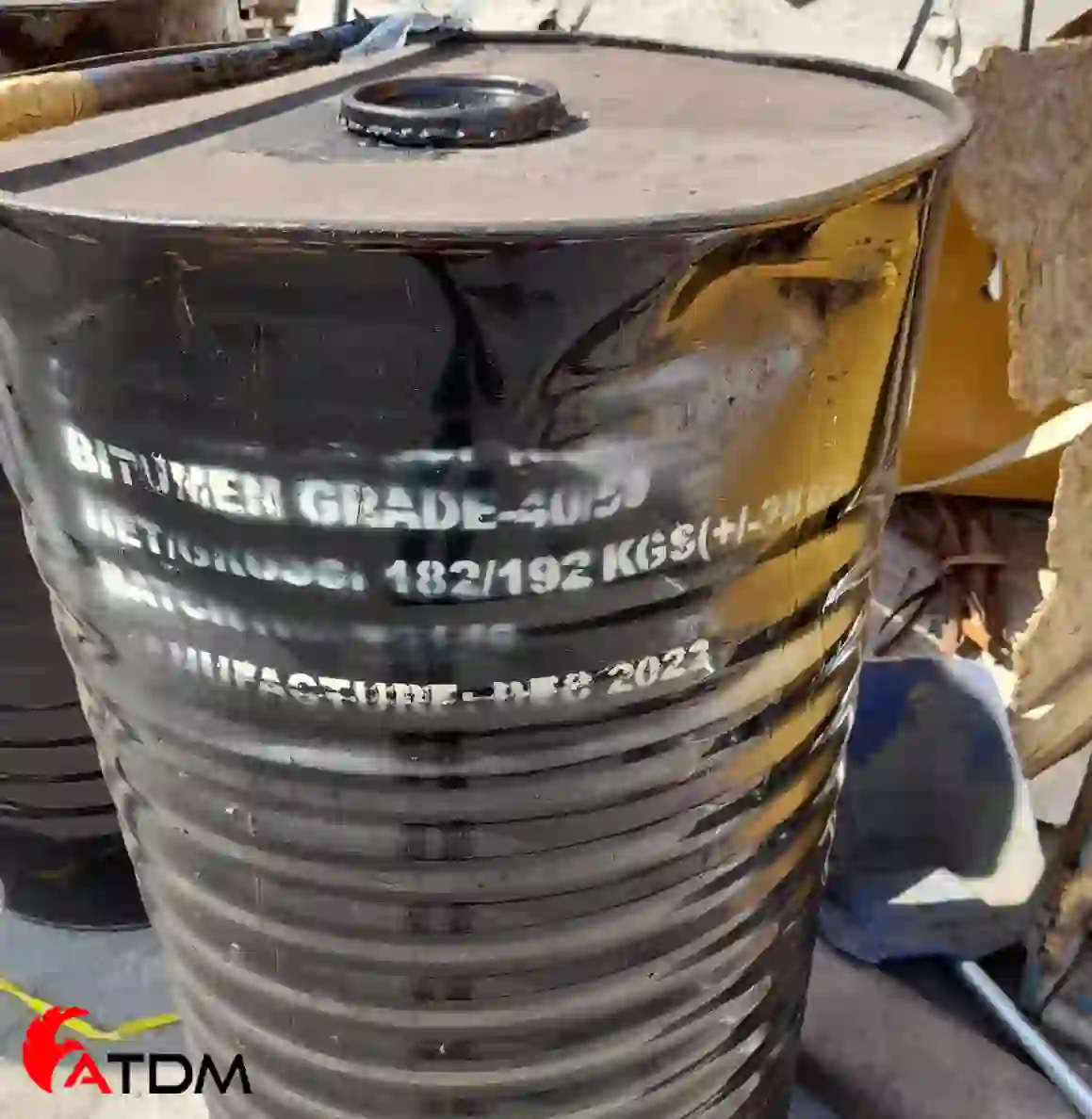
Bitumen 40/50 is a hard-grade paving bitumen produced by controlled vacuum distillation of crude oil, designed for heavy-duty asphalt and industrial applications where high load resistance and thermal stability matter. It solves premature deformation, rutting, and softening in hot climates or under slow, heavy traffic. This grade is used by road contractors, asphalt plant operators, industrial flooring producers, and infrastructure buyers who need predictable stiffness and durability. In real operations, it matters because the wrong penetration grade leads to early pavement failure, higher maintenance cost, and inconsistent asphalt performance.
When you work with Bitumen 40/50 on site, the first thing you notice is its firmness compared to softer paving grades. This is not a laboratory detail—it changes how asphalt behaves during mixing, laying, and compaction. In hot regions or high-load environments, this hardness is exactly what prevents wheel tracking and surface bleeding.
At ATDM, we see buyers choosing Bitumen 40/50 when projects face one or more of these realities:
Table of Contents
ToggleHigh ambient temperatures
Heavy trucks moving at low speeds
Industrial yards with static or slow-moving loads
Roads where long service life matters more than easy laying
This grade does not forgive poor temperature control at the asphalt plant. That is not a weakness—it is a signal that the material is doing its job. Engineers who respect heating limits and mixing discipline get excellent results. Those who treat it like a softer grade usually struggle.
In real supply chains, Bitumen 40/50 rarely goes to light urban streets. It is selected for specific performance needs.
Typical applications include:
Heavy-duty highways in warm climates
Industrial roads and port areas
Airport service roads and logistics zones
Asphalt base layers under high stress
Special asphalt mixes requiring higher stiffness
In several export markets, buyers use Bitumen 40/50 where others might use penetration grade 60/70, but only when higher resistance to deformation is required and construction teams are experienced with harder binders.
Specifications matter, but performance in the field matters more. With Bitumen 40/50, buyers should focus on behavior, not just numbers.
Key real-world characteristics include:
High resistance to rutting under sustained load
Lower temperature susceptibility compared to softer grades
Reduced bleeding risk in hot weather
Stronger asphalt skeleton when properly compacted
One common mistake is assuming harder always means better. Bitumen 40/50 is not ideal for cold climates or thin wearing courses unless the mix design compensates for stiffness. Experienced buyers always align grade selection with climate, traffic, and layer function.
When procurement teams evaluate Bitumen 40/50, the decision usually comes down to operating conditions, not price alone.
Serious buyers ask:
What is the average and peak pavement temperature?
Will traffic be slow and heavy or fast and light?
Is the asphalt plant capable of precise temperature control?
How critical is long-term deformation resistance?
In some projects, a switch from a softer grade to Bitumen 40/50 solves chronic rutting issues without changing aggregate structure. In others, it creates compaction problems. The difference is technical judgment, not material quality.
The bitumen 40/50 price is influenced by more than crude oil. In export markets, we see buyers misjudge costs by focusing only on headline numbers.
Real pricing factors include:
Crude oil feedstock quality
Refinery production consistency
Penetration and softening point control
Packing method (drum, jumbo bag, bulk)
Shipment size and loading port
Because Bitumen 40/50 is a narrower-range product, quality control costs are higher than for softer grades. This directly affects the bitumen 40/50 price, especially from reliable suppliers.
Before finalizing contracts, experienced traders always check bitumen price trends across regions and confirm whether quoted material meets actual operational needs, not just minimum specs.
Choosing a bitumen 40/50 supplier is not about certificates alone. Inconsistent penetration, poor oxidation control, or unstable blending leads to serious downstream problems.
From real export experience, the most common supplier-related issues are:
Variation between batches
Over-oxidized material to “hit” penetration
Inadequate drum filling and contamination
Poor documentation alignment with cargo
ATDM focuses on consistency because industrial buyers do not test one drum—they build roads with thousands of tons. A reliable bitumen 40/50 supplier delivers the same behavior month after month, not just one compliant sample.
Harder grades demand discipline. Bitumen 40/50 must be handled with controlled heating to avoid thermal aging.
Practical handling points:
Avoid prolonged storage above recommended temperatures
Use clean, insulated tanks
Rotate stock to prevent oxidation
Ensure uniform heating before discharge
For export, drums must be properly sealed and filled to avoid oxidation during transit. Jumbo bags and bulk shipments require temperature-controlled logistics and experienced loading teams. These details directly affect performance at destination.
Even experienced buyers sometimes misuse Bitumen 40/50.
Typical mistakes include:
Selecting it purely to “increase strength” without mix redesign
Using it in cold climates without modifiers
Comparing it directly to bitumen 60/70 without considering application differences
Ignoring handling requirements at the asphalt plant
The material performs exactly as designed. Problems usually come from incorrect expectations, not product failure.
Bitumen 40/50 is not a general-purpose solution. It is a targeted tool for demanding conditions where softer binders fail too early. When specified correctly, produced consistently, and handled with care, it delivers long-term structural stability that reduces lifecycle cost.
Buyers who understand this grade do not ask whether it is “better.” They ask whether it is right for their road, plant, or industrial surface. That question—more than any specification—defines a successful project.