
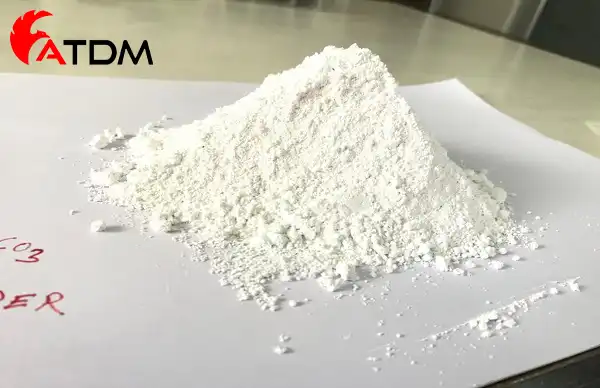
Calcium carbonate is a naturally occurring mineral used in industry as a filler, extender, functional additive, and process stabilizer, depending on how it is processed and applied. In real operations, it solves practical problems such as cost control, product consistency, surface finish, opacity, and mechanical stability. Manufacturers in plastics, rubber, paper, construction materials, paints, coatings, adhesives, and chemicals rely on it daily. It matters because the wrong grade, particle size, or purity can quietly disrupt production, while the right material improves performance without complicating the process.
What calcium carbonate really does in industrial production
In factories, calcium carbonate is rarely treated as a “simple mineral.” It directly affects how a product flows, cures, bonds, prints, or survives long-term use. In plastic compounding, it can stiffen a formulation or reduce shrinkage. In paper and coatings, it controls brightness and surface smoothness. In construction materials, it stabilizes formulations and improves workability.
What many new buyers underestimate is that performance is not just about chemical composition. Two shipments may show similar lab results but behave differently on the production line. This usually comes down to particle shape, size distribution, moisture level, and consistency between batches. These factors decide whether operators adjust machines once a shift—or fight with them all day.
Table of Contents
ToggleCommon industrial applications seen in practice
In plastics manufacturing, calcium carbonate is commonly used in PVC pipes, profiles, cable compounds, and masterbatches. Fine grades help control melt flow and dimensional stability, while coarser grades focus more on cost reduction. Problems arise when particle size does not match screw design or processing temperature.
In paints and coatings, calcium carbonate contributes to opacity, rheology, and film build. Too coarse, and surface finish suffers. Too fine, and dispersion time increases. Buyers often discover this during scale-up, not lab trials.
In paper production, calcium carbonate replaces kaolin in many systems due to brightness and printability advantages. However, water quality and pH control become more sensitive, especially in recycled fiber lines.
Construction materials like tile adhesive, dry mortar, wall putty, and cement blends use calcium carbonate to balance strength, workability, and cost. Inconsistent grades show up quickly as cracking, sagging, or poor spreadability on site.
Understanding grades: not all calcium carbonate behaves the same
From a supply and quality-control perspective, calcium carbonate is usually divided into ground (GCC) and precipitated (PCC) material. GCC comes from mechanically grinding natural limestone, while PCC is produced through controlled chemical precipitation.
GCC is favored where volume, cost efficiency, and mechanical reinforcement matter. PCC is chosen when precise particle control and high purity are critical. Engineers often prefer PCC for specialty polymers or high-end coatings, while GCC dominates bulk applications.
Particle size distribution matters more than average size. A narrow distribution improves consistency but costs more. Wide distributions are cheaper but harder to control in sensitive processes. Buyers who only specify “micron size” often face performance variation later.
Quality factors that actually matter on the production floor
Experienced buyers of calcium carbonate look beyond certificates. They ask about:
Batch-to-batch consistency
Moisture pickup during storage
Tendency to agglomerate
Oil absorption behavior
Effect on wear in screws and mixers
One of the most common mistakes is focusing only on price per ton. A cheaper material that causes higher scrap rates, longer mixing times, or frequent line adjustments usually costs more by the end of the month.
Another overlooked factor is contamination. Trace silica, iron, or oversized particles can damage equipment or create surface defects. These issues rarely appear in small lab samples but become visible in continuous production.
Choosing the right calcium carbonate for your operation
Selecting calcium carbonate should start with the application, not the catalog. Ask what the material must do, not just what it is. Does it need to reinforce, fill space, improve appearance, or stabilize processing? Each goal points to a different grade.
Processing method matters. High-speed mixers, twin-screw extruders, and ball mills all interact differently with mineral fillers. A grade that works well in one plant may fail in another with different shear and residence time.
Engineers often run short trials, but procurement teams should also consider supply reliability. A technically perfect material that arrives late or varies by shipment introduces operational risk.
Handling, storage, and shipping realities
In warehouses and export containers, calcium carbonate behaves like a fine powder, but it reacts strongly to humidity. Moisture absorption leads to caking, especially in warm climates. Proper packaging—valve bags, jumbo bags with liners, or bulk containers—reduces this risk.
During loading and unloading, dust control matters. Excessive fines create housekeeping issues and health concerns for workers. Consistent particle sizing helps reduce airborne dust during handling.
Long-distance shipping introduces another variable: vibration. Poorly stabilized bags can compact unevenly, affecting flow when opened. This is why experienced suppliers focus not just on production but on logistics design.
Typical buyer questions before placing an order
Buyers evaluating calcium carbonate often ask whether it will replace their current grade without reformulation. The honest answer is: sometimes, but not always. Small formulation tweaks are common and should be expected.
Another frequent question concerns compatibility with additives, resins, or binders. Surface-treated grades behave differently from untreated ones, especially in polymers and coatings. Ignoring this leads to dispersion issues.
Lead time, minimum order quantity, and documentation also matter. Industrial buyers prefer suppliers who understand export documentation, quality reporting, and long-term supply planning—not just spot sales.
Why supplier consistency matters more than specs
A stable source of calcium carbonate reduces operational noise. When material behaves the same month after month, engineers stop firefighting and focus on optimization. This stability is often worth more than a marginal price advantage.
From experience, long-term buyers value suppliers who communicate changes early—whether in quarry source, processing method, or logistics route. Surprises are costly in industrial production.
At ATDM, calcium carbonate supply is treated as a system: raw material selection, controlled processing, quality checks, and export-ready logistics. This approach aligns with how real factories operate, not how brochures are written.
Final practical perspective
Calcium carbonate is not a commodity you choose once and forget. It interacts with equipment, people, and processes every day. When selected with practical understanding, it improves consistency and lowers overall cost. When chosen only on paper, it quietly creates problems.
For engineers, buyers, and production managers, the right decision starts with understanding how the material behaves beyond the datasheet—and working with suppliers who understand that reality.