
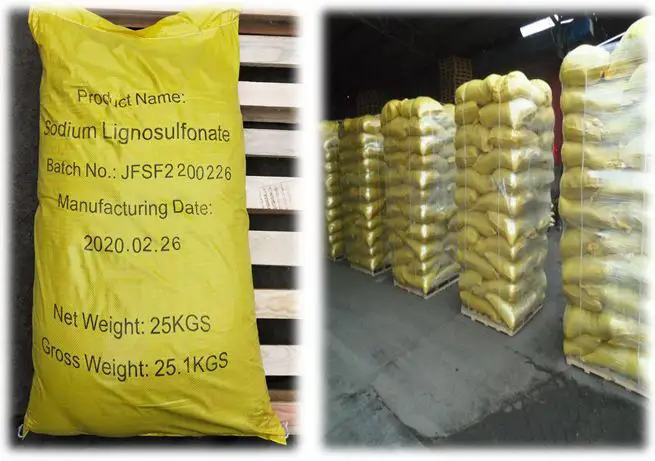
Lignosulfonate is a water-soluble industrial polymer derived from the sulfite pulping of wood, widely used as a dispersant, binder, plasticizer, and dust-control agent. It matters because it improves flow, stability, and cohesion in mineral-based systems while remaining cost-effective and compatible with large-scale industrial processes. Manufacturers, engineers, and procurement teams rely on it when they need predictable performance in cement, concrete, animal feed, drilling fluids, and agricultural formulations. If you work with bulk solids, slurries, or pellets, lignosulfonate solves practical processing problems—not theoretical ones.
In practical terms, lignosulfonate is not a single chemical but a family of lignin-based salts, typically calcium, sodium, or magnesium Lignin sulfonate. These salts form during wood pulping when lignin reacts with sulfite compounds.
From an application standpoint, its value comes from two behaviors:
Table of Contents
ToggleDispersion: it separates fine particles and keeps them suspended
Binding: it creates cohesion once moisture evaporates
This dual function explains why Lignin sulfonate appears in such different industries yet performs reliably in all of them.
Many buyers ask for the exact lignosulfonate formula. In reality, Lignin sulfonate does not have a single fixed molecular formula because it is a polymer with variable chain lengths.
However, it is commonly represented as:
General structure: sulfonated lignin polymer
Empirical representation: C₂₀H₂₄Na₂O₁₀S₂ (varies by metal base)
What matters more than the theoretical formula is:
Molecular weight range
Sulfonate group density
Metal base (Ca, Na, Mg)
These parameters directly affect solubility, dispersing strength, and compatibility with cement, feed, or drilling systems.
In construction materials, lignosulfonate acts as a plasticizer and water reducer. It disperses cement particles, allowing better hydration with less water.
Operational benefits include:
Improved workability and pumpability
Reduced water demand (typically 5–10%)
Better surface finish in blocks and plaster
It performs best in standard concrete, masonry units, and gypsum boards. Engineers do not use it for ultra-high-performance concrete, but it remains highly effective in mass production environments.
Feed producers use lignosulfonate primarily as a pellet binder. It improves pellet durability while reducing dust and fines during handling.
From plant experience:
Pellets maintain shape during transport
Less material loss in silos and conveyors
Improved moisture resistance
Buyers typically evaluate sugar content, ash level, and binding strength rather than chemical theory.
In drilling fluids, lignosulfonate works as a thinner and dispersant in water-based muds. It controls viscosity and stabilizes solids under moderate temperature conditions.
Key field advantages:
Compatible with bentonite and barite
Controls gel strength
Cost-efficient for conventional wells
It is widely used where extreme thermal stability is not required.
Agricultural formulators use lignosulfonate as:
A dispersant in wettable powders
A chelating agent for micronutrients
A dust suppressant for fertilizers and rural roads
Its biodegradability and mineral compatibility make it suitable for regulated markets.
Lignosulfonate powder is the most common export grade due to its stability and ease of handling. It dissolves readily in water and allows flexible dosing.
Lignosulfonate powder advantages:
Longer shelf life
Lower transport cost
Easier storage in dry conditions
Liquid lignosulfonate suits automated dosing systems but requires temperature-controlled storage. Buyers usually choose based on logistics, not performance differences.
Industrial buyers focus on measurable parameters rather than brand claims.
Key specifications include:
Dry matter content
pH range (typically 4–7)
Ash content
Solubility and filtration behavior
Metal base (Ca / Na / Mg)
Although no single ASTM standard defines lignosulfonate, reliable suppliers control production under ISO-aligned quality systems and provide consistent COA data.
Proper handling prevents most performance complaints.
Best practices:
Keep powder dry to prevent caking
Avoid prolonged exposure to humidity
Store liquids above freezing point
Use corrosion-resistant tanks
Performance issues usually result from storage or dilution errors, not material defects.
Lignosulfonate price depends on several non-obvious factors. Buyers often assume all grades cost the same, but that is rarely true.
Price is influenced by:
Metal base (calcium vs sodium)
Form (powder vs liquid)
Purity and ash content
Packaging and shipment volume
Regional supply from pulp mills
In most markets, Sulfonated lignin remains one of the most cost-effective functional additives, especially when compared to synthetic dispersants and binders.
Lignosulfonate performs well within its design limits, but it is not universal.
Known limitations:
Not suitable for high-performance concrete
Limited thermal stability
Dark color may affect light-colored products
Understanding these boundaries prevents misuse and formulation issues.
Is lignosulfonate environmentally friendly?
It is derived from renewable wood sources and is generally biodegradable, but regulatory classification depends on application.
Can one grade serve all industries?
No. Cement, feed, drilling, and agriculture require different specifications.
Does higher dosage always improve results?
No. Overdosing can reduce strength or delay setting.
ATDM supplies industrial-grade lignosulfonate to buyers who require consistent quality, clear specifications, and export-ready logistics. The focus remains on application-matched grades and reliable documentation rather than generic trading.
Lignosulfonate is a practical solution when you need dispersion, binding, or dust control at industrial scale. It fits cement, feed, drilling, and agricultural applications where reliability and cost efficiency matter more than extreme performance. Before purchasing, confirm the correct grade, form, and specification for your process. The logical next step is to review technical data and match the product to your operating conditions.