
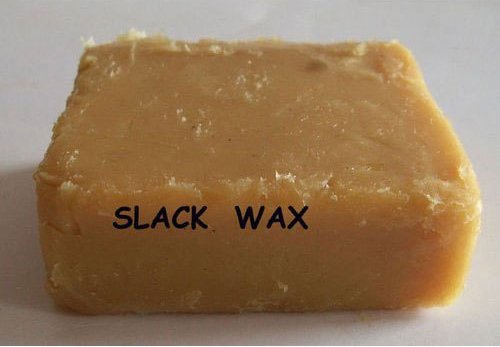
Slack wax is a semi-refined petroleum wax produced as a by-product during base oil refining. It contains a mixture of paraffinic wax and residual oil, which gives it flexibility, workability, and cost advantages over fully refined waxes. Manufacturers use slack wax when they need a wax that melts easily, blends well, and does not require high purity. It matters for buyers who want an economical raw material for candles, boards, rubber, matches, and further wax refining. If you work in manufacturing, compounding, or wax processing, slack wax is often the first and most practical choice.
Refineries produce slack wax during the solvent dewaxing of lubricating base oils. At this stage, wax crystals separate from oil, but the refining process does not remove all the oil content.
This composition gives slack wax its key characteristics:
Table of Contents
ToggleModerate melting range, usually between 45°C and 60°C
Oil content that can range from about 5% to over 20%
Soft, pliable texture at room temperature
For buyers, this means slack wax behaves very differently from fully refined paraffin wax. It stays flexible, processes easily, and costs less. However, it does not offer high purity or bright color, which limits its use in cosmetic or food-related products.
In real transactions, buyers rarely ask only for “slack wax.” They ask about oil content, melting point, and color because these factors directly affect performance.
Common commercial ranges include:
Low-oil slack wax (5–10%): Firmer structure, closer to semi-refined paraffin
Medium-oil slack wax (10–15%): Balanced flexibility and strength
High-oil slack wax (15–25%): Very soft, highly workable, lower melting
Most suppliers test slack wax according to ASTM methods for melting point, oil content, and penetration. Buyers often request a recent COA to confirm consistency, especially when the wax feeds into a secondary refining or blending process.
Slack wax does not try to replace fully refined wax. It serves specific industrial needs where flexibility and cost efficiency matter more than appearance.
Many candle makers use slack wax for utility candles, outdoor candles, or blended formulations. The oil content improves burn stability and reduces brittleness, especially in cold environments.
In match production, slack wax coats wooden sticks to improve ignition control. Board and fiber manufacturers use it for moisture resistance and surface treatment.
Rubber processors add slack wax as a processing aid. It improves flow during mixing and helps control surface cracking caused by ozone exposure.
Wax refineries use slack wax as the starting material to produce semi-refined and fully refined paraffin wax. In this role, stable quality matters more than visual appearance.
From a practical standpoint, slack wax requires realistic expectations.
Oil content affects hardness and migration. Higher oil levels improve flexibility but can bleed to the surface in finished products. Melting point influences storage and handling, especially in warm climates.
Buyers also consider:
Compatibility with polymers, fillers, or additives
Odor level during heating
Behavior during repeated heating and cooling cycles
These factors often matter more than price alone, especially in continuous production lines.
Slack wax usually ships in slabs, blocks, or bags, depending on buyer preference and climate. In warm regions, suppliers often recommend solid packaging to reduce deformation during transport.
Best handling practices include:
Storing away from direct sunlight
Avoiding prolonged exposure above its melting range
Using clean heating systems to prevent contamination
Because slack wax contains oil, it tolerates minor temperature fluctuations better than brittle refined waxes. This makes it easier to manage in bulk storage.
Serious industrial buyers expect basic but reliable documentation. This usually includes:
Certificate of Analysis for each batch
Typical specification range rather than fixed numbers
Clear disclosure of oil content and melting point
Suppliers like ATDM focus on consistency rather than unrealistic tight tolerances, which helps buyers design processes that work with real-world material variation.
Slack wax offers clear benefits:
Lower cost compared to refined waxes
Better flexibility and processing ease
Suitable for blending and secondary refining
At the same time, it has limitations:
Not suitable for food, cosmetic, or pharmaceutical use
Darker color and higher odor than refined wax
Oil migration can affect finished products if not managed
Understanding both sides helps buyers avoid application problems later.
Slack wax makes sense when purity is not critical and when cost, flexibility, or blending behavior matters more. It works well in industrial manufacturing, compounding, and as a refining feedstock.
If your application requires clean appearance, tight odor control, or regulatory compliance for consumer products, a more refined wax may be the better choice.
Slack wax remains a practical, widely used material across many industries because it balances performance and cost. When buyers focus on the right oil content, melting range, and supplier consistency, it delivers reliable results in demanding production environments.
The next step is simple: review your application requirements, confirm the acceptable oil range, and match them against a current specification and sample. This approach helps ensure slack wax works for your process, not against it.