
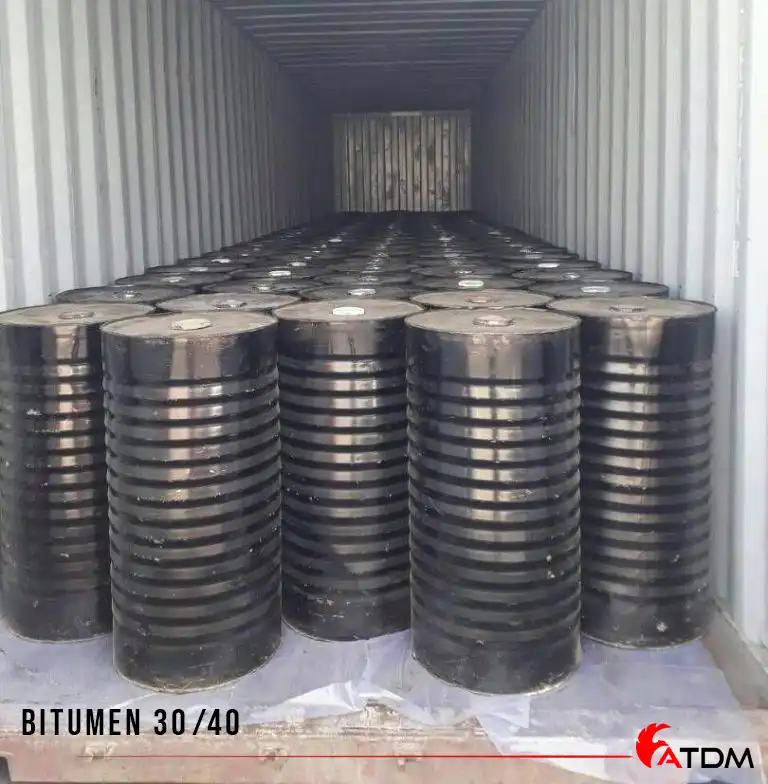
Bitumen 30/40 is a hard penetration-grade paving bitumen used where high load, high temperature, and structural stability matter. It solves premature deformation, rutting, and surface instability in heavy-duty asphalt works by maintaining stiffness under heat and pressure. Industrial contractors, road engineers, refinery buyers, and infrastructure procurement teams use it when softer grades fail too early. In real operations, Bitumen 30/40 matters because it directly affects pavement lifespan, maintenance cycles, and long-term project cost—not lab numbers.
When buyers ask what 30/40 bitumen means, the short answer is penetration range. The real answer is performance behavior.
Bitumen 30/40 sits on the harder end of penetration grades. In practice, this means it resists flow under high surface temperatures and heavy axle loads better than mid-range grades. On sites where summer heat, slow traffic, or static loads exist, this grade holds shape instead of creeping.
Table of Contents
ToggleEngineers usually choose Bitumen 30/40 when they want control, not flexibility. It does not forgive poor mix design, but when handled correctly, it delivers predictable performance.
This is not a universal-grade material. It is a purpose-driven grade.
From real supply and job-site feedback, Bitumen 30/40 consistently performs in:
Heavy-duty highways with sustained truck traffic
Industrial access roads inside plants, refineries, and ports
Airport service roads and apron layers
Hot-climate paving projects
Structural asphalt layers requiring stiffness
Buyers who misuse asphalt 30/40 in low-load or cold environments often complain about brittleness. That is not a product flaw—it is a grade-selection mistake.
Compared to penetration asphalt grade 60/70, Bitumen 30/40 offers higher resistance to deformation but less flexibility. This makes it unsuitable for areas with high thermal movement but ideal where shape retention matters more than elasticity.
Compared to very hard grades, Grade 30/40 still allows workable mixing and compaction without extreme heating, which reduces energy cost during asphalt production.
This balance is why experienced contractors keep this bitumen grade for specific layers—not entire pavement systems.
From years of supply-side experience, these are recurring issues:
Using it as a general-purpose bitumen
Bitumen 30/40 is not a replacement for mid-range grades.
Ignoring climate conditions
In cold regions, improper use leads to cracking.
Overheating during mixing
Higher temperatures do not improve performance and may damage consistency.
Focusing only on penetration numbers
Real quality shows in softening point stability and batch consistency.
Experienced buyers evaluate more than certificates.
When sourcing Bitumen 30/40, professional buyers focus on:
Consistent penetration across batches
Stable softening point under controlled heating
Uniform color and texture
Absence of water contamination
Controlled aging behavior
A low price does not compensate for unstable quality. One inconsistent shipment can compromise an entire asphalt run.
This is why supplier reliability matters more than discounts.
Bitumen 30/40 requires disciplined handling.
During storage:
Maintain stable temperature without overheating
Avoid long-term oxidation exposure
Keep tanks clean and dry
During shipping:
Drums must be properly sealed and upright
Bulk shipments require temperature monitoring
Delays at ports increase risk of quality drift
Experienced procurement teams factor logistics into total cost—not just material price.
Before confirming bituminous 30/40 for sale, serious buyers ask:
Is the supply refinery-direct or blended?
How consistent are previous batches?
What is the typical shipment volume per month?
How stable is the supplier during peak season?
They also check bitumen price trends, not just current offers, to avoid short-term decisions that hurt long-term contracts.
From a commercial perspective, ATDM supplies Bitumen 30/40 with a focus on consistency, documented quality control, and export-ready logistics. This matters to buyers who operate continuously and cannot afford supply interruptions or variable performance.
ATDM works with buyers who understand that correct grade selection reduces lifecycle cost more than chasing the lowest invoice number.
Choose Bitumen 30/40 if:
Load resistance is critical
Pavement deformation risk is high
Climate conditions support harder grades
Avoid it if:
Flexibility is more important than stiffness
Thermal cycling is extreme
Surface layers require elasticity
The best projects use the right grade in the right layer—not one grade everywhere.
Bitumen 30/40 is not a beginner-grade material. It rewards experience and planning. Buyers who understand application limits, handling discipline, and supplier reliability gain predictable performance and reduced maintenance.
Those who treat it like a generic bitumen usually pay for that mistake later.
This is why professional buyers do not ask whether Bitumen 30/40 is “good.”
They ask where and how it should be used.
And that question makes all the difference.