
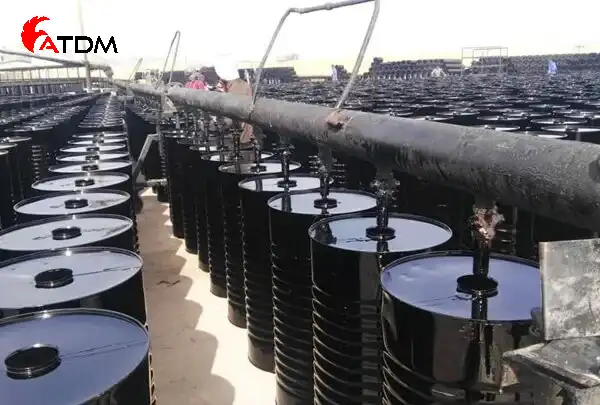
When performance, speed, and durability matter in road construction, cutback bitumen SC 3000 stands out as a trusted solution. Designed for superior penetration and reliable bonding, this slow-curing bituminous binder plays a critical role in modern infrastructure projects across diverse climates.
In this commercial guide, we explore everything you need to know about cutback bitumen SC 3000—its properties, applications, advantages, technical insights, and why choosing a reliable supplier like ATDM ensures consistent quality and long-term performance.
Cutback bitumen SC 3000 is a slow-curing (SC) asphalt product manufactured by blending penetration-grade bitumen with controlled amounts of petroleum solvents. The solvent temporarily reduces the viscosity of the bitumen, making it easier to apply at lower temperatures.
Table of Contents
ToggleOnce applied, the solvent gradually evaporates, leaving behind a durable bituminous film that provides strong adhesion and waterproofing characteristics.
The “SC” classification refers to slow curing, and the number “3000” indicates its viscosity range, making it suitable for applications requiring deep penetration and extended working time.
Road construction and maintenance require materials that deliver:
Strong bonding capability
Long-lasting durability
Controlled curing time
Easy application
Reliable penetration into base layers
Cutback bitumen SC 3000 meets these requirements efficiently. It is particularly valuable in large-scale road projects, surface treatments, prime coats, and maintenance operations where timing and performance are critical.
Understanding the technical profile of cutback bitumen SC 3000 helps engineers and procurement managers make informed decisions.
SC 3000 has a relatively high viscosity compared to medium- or rapid-curing cutbacks. This ensures deeper penetration into granular surfaces while maintaining stability during application.
The solvent evaporates gradually, allowing extended workability. This is ideal for large surface areas where immediate curing is not required.
Once the solvent evaporates, the remaining bitumen forms a strong bond with aggregates and base layers.
The final bituminous layer provides effective moisture resistance, protecting the pavement structure from water infiltration.
Because of its solvent composition, cutback bitumen SC 3000 can be applied without excessive heating, improving safety and efficiency on site.
Cutback bitumen SC 3000 is widely used across infrastructure sectors. Its versatility makes it an essential material for contractors and road authorities.
One of the most common uses of cutback bitumen SC 3000 is as a prime coat over granular base layers. It penetrates the base and binds loose particles together before the asphalt layer is placed.
SC 3000 is ideal for surface dressing operations, where controlled curing time is required to ensure proper aggregate bonding.
In rehabilitation and patching projects, cutback bitumen SC 3000 provides excellent adhesion to existing pavement surfaces.
For rural roads and secondary highways, it serves as a reliable binder that ensures durability at a cost-effective level.
In some cases, it can be used for stabilizing and controlling dust on unpaved roads.
Because of its reduced viscosity, cutback bitumen SC 3000 is easier to handle and apply, especially in cooler climates.
Lower heating requirements reduce energy consumption and operational costs.
Its slow-curing formulation allows it to penetrate porous surfaces effectively, ensuring long-term stability.
Ease of application accelerates project timelines without compromising quality.
The durable bituminous film formed after solvent evaporation enhances pavement life.
Infrastructure investment requires materials that provide measurable return over time. Cutback bitumen SC 3000 contributes to long-lasting pavements through:
Improved bonding between layers
Reduced moisture damage
Enhanced structural stability
Minimized cracking in base layers
When applied according to engineering standards, it significantly reduces maintenance cycles.
To maximize the performance of cutback bitumen SC 3000, proper handling is essential:
Store in well-ventilated tanks away from open flames.
Maintain recommended temperature conditions.
Avoid prolonged exposure to direct sunlight.
Follow safety regulations for solvent-based materials.
Professional suppliers provide detailed technical data sheets and safety documentation to ensure compliance with industry standards.
In infrastructure projects, material quality is non-negotiable. Cutback bitumen SC 3000 should comply with recognized international standards for viscosity, flash point, and distillation properties.
Reputable suppliers conduct laboratory testing for:
Viscosity measurement
Solvent content
Residue characteristics
Flash point
Specific gravity
Choosing a trusted supplier such as ATDM ensures that each shipment meets strict quality control requirements and international specifications. Consistency in production is key to achieving predictable project outcomes.
Experience and technical knowledge significantly impact material performance. An established supplier does more than deliver product—they provide:
Technical consultation
Application guidance
Product documentation
On-time logistics support
Compliance assurance
Working with a knowledgeable supplier like ATDM guarantees access to expert support, helping contractors optimize the performance of cutback bitumen SC 3000 in real-world conditions.
While cutback bitumen SC 3000 offers outstanding performance benefits, it is important to address environmental and safety aspects:
Ensure proper ventilation during application.
Use protective equipment for workers.
Follow local environmental regulations.
Prevent solvent runoff into waterways.
Modern infrastructure practices increasingly emphasize responsible usage, and suppliers often provide recommendations aligned with environmental best practices.
Understanding where cutback bitumen SC 3000 fits among other bitumen types helps decision-makers select the right product.
| Product Type | Curing Speed | Application Temperature | Best Use Case |
|---|---|---|---|
| Rapid Curing (RC) | Fast | Moderate | Surface treatments |
| Medium Curing (MC) | Moderate | Moderate | Mixing with aggregates |
| Slow Curing (SC 3000) | Slow | Lower heating required | Prime coats & deep penetration |
| Emulsified Bitumen | Water-based | Low | Environmentally sensitive areas |
The slower curing time of SC 3000 makes it particularly suitable when penetration and workability are priorities.
For contractors and distributors, cutback bitumen SC 3000 provides:
Reliable supply chain compatibility
Easy transportation in bulk
Flexible packaging options
Competitive pricing in large volumes
Strong resale demand in road construction markets
These factors make it a commercially attractive solution for infrastructure stakeholders.
Industry experts recommend:
Applying on properly prepared and cleaned surfaces.
Monitoring ambient temperature and humidity.
Avoiding application during heavy rain.
Allowing adequate curing time before overlay placement.
Using calibrated spray equipment for uniform distribution.
These practices ensure optimal bonding and long-term pavement durability.
1. What is cutback bitumen SC 3000 mainly used for?
Cutback bitumen SC 3000 is primarily used for prime coating, surface dressing, and road maintenance projects requiring deep penetration and slow curing.
2. Why is it called “slow curing”?
The solvent evaporates gradually, allowing extended working time before the bitumen fully sets.
3. Does cutback bitumen SC 3000 require heating?
It requires significantly less heating than conventional penetration-grade bitumen due to reduced viscosity.
4. Is cutback bitumen SC 3000 suitable for cold climates?
Yes, its lower viscosity makes it easier to apply in cooler weather conditions compared to standard bitumen.
5. How long does it take to cure?
Curing time depends on temperature, wind, and solvent composition, but it is slower than rapid- or medium-curing cutbacks.
6. What safety precautions are necessary?
Proper ventilation, protective equipment, and compliance with handling guidelines are essential due to solvent content.
7. How do I ensure product quality?
Always source from reputable suppliers who provide laboratory test reports and quality certifications.
8. Can it be used for heavy traffic roads?
Yes, when properly applied as part of a structured pavement system, it supports heavy-duty performance.
In the evolving world of infrastructure development, choosing the right binder is essential. Cutback bitumen SC 3000 delivers deep penetration, strong adhesion, controlled curing, and long-lasting durability—all critical for modern road construction and maintenance.
From prime coats to rehabilitation projects, its technical advantages translate into measurable field performance. By partnering with experienced suppliers and adhering to professional application standards, contractors can maximize both efficiency and pavement lifespan.
For infrastructure projects that demand consistency, reliability, and expert-backed quality, cutback bitumen SC 3000 remains a proven and commercially smart solution.