
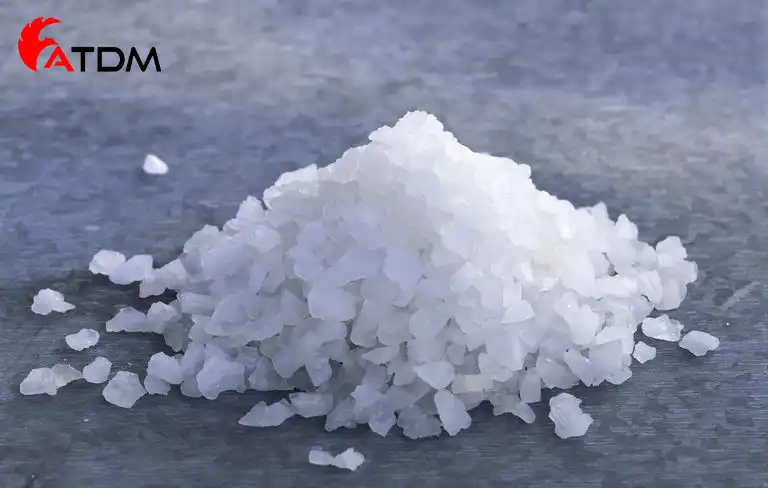
Sodium chloride is a fundamental industrial raw material used to control chemical reactions, stabilize processes, and meet regulatory requirements across manufacturing, utilities, and processing industries. It matters because its purity, physical form, and moisture level directly influence efficiency, equipment life, and product quality. Chemical producers, water treatment plants, food manufacturers, and oilfield operators rely on sodium chloride not as a household salt, but as a specified material with measurable performance criteria. Choosing the wrong grade can create hidden operational costs long before it shows up in lab results.
Understanding sodium chloride beyond the basic definition
At its core, sodium chloride (NaCl) is a simple ionic compound. In real industrial environments, however, it behaves differently depending on how it is produced, refined, and handled.
Industrial sodium chloride usually comes from three routes:
Table of Contents
Toggle-
Rock salt mining, which delivers mechanically crushed crystals
-
Solar evaporation, which depends on climate and evaporation control
-
Vacuum evaporation, which produces the highest purity material
Each route affects crystal structure, impurity profile, and consistency. Engineers rarely select sodium chloride based on origin alone. They select it based on how reliably it performs in dosing systems, dissolves in water, and interacts with other process chemicals.
Why grade selection is a technical decision, not a commercial one
Industrial-grade sodium chloride
This grade serves chemical manufacturing, oilfield operations, textiles, detergents, and de-icing blends.
Typical considerations include:
-
Sodium chloride content around 97–99%
-
Controlled insoluble matter
-
Stable particle size distribution
In practice, buyers ask questions like:
-
Will this material dissolve fast enough for our batch time?
-
Does it leave residue in tanks or pipelines?
-
Will it increase corrosion risk in our system?
These questions rarely show up on price sheets, but they define real performance.
Food-grade sodium chloride
Food processors use sodium chloride for preservation, fermentation control, and flavor standardization.
What matters most:
-
Compliance with food safety standards
-
Low heavy metal content
-
Clean sensory profile
-
Predictable flow and dissolution
Food-grade material often costs more because purification and traceability are part of the product, not optional extras.
Pharmaceutical and high-purity grades
Used in medical solutions, dialysis, and laboratory applications.
These grades require:
-
Very high chemical purity
-
Tight microbiological control
-
Full batch traceability
Even minor deviations can make the product unusable, which is why buyers treat documentation as seriously as the material itself.
Where sodium chloride is used in real operations
Chemical production
In chlor-alkali plants and downstream chemical processes, sodium chloride acts as a feedstock and ionic control agent.
Here, trace impurities such as calcium or magnesium can:
-
Reduce membrane life
-
Interfere with catalysts
-
Increase maintenance frequency
For these users, consistency across shipments is more valuable than marginal purity increases.
Water treatment and softening
Sodium chloride regenerates ion-exchange resins in municipal and industrial water systems.
Operational priorities include:
-
Fast dissolution
-
Minimal insoluble residue
-
Low sludge formation
Plants often reject material not because of chemistry, but because it creates operational downtime.
Oil and gas operations
Used in drilling fluids and completion brines to:
-
Control density
-
Inhibit shale swelling
On-site mixing conditions are rarely ideal. Moisture content and crystal uniformity directly affect mixing speed and crew efficiency.
Food processing
Used in brining, curing, and fermentation processes.
Processors evaluate:
-
Taste neutrality
-
Dissolution consistency
-
Flow behavior in automated systems
Switching suppliers without trials often leads to unexpected formulation adjustments.
Physical form: an underestimated performance factor
Sodium chloride may be supplied as:
-
Fine powder
-
Granular crystals
-
Coarse rock salt
-
Compacted tablets
The wrong physical form can cause:
-
Bridging in silos
-
Uneven dosing
-
Slow dissolution
-
Overconsumption to compensate for losses
Many procurement teams learn this only after production complaints begin.
Quality control: what experienced buyers actually review
Serious buyers do not rely on generic datasheets. They look for:
-
Recent certificates of analysis (COA)
-
Defined impurity limits
-
Moisture specifications
-
Particle size data
Depending on the industry, sodium chloride may be evaluated against ASTM, EN, Codex, or internal plant standards. The key is alignment with process needs, not simply meeting a published norm.
Storage, logistics, and handling realities
From experience, sodium chloride failures often happen after production, not during it.
Common issues include:
-
Moisture absorption in humid climates
-
Caking during long storage periods
-
Corrosion of steel handling equipment
-
Bag damage during sea freight
Buyers should clarify:
-
Packaging type and liner quality
-
Palletization method
-
Container loading practices
-
Shelf-life expectations under local conditions
These details affect delivered cost more than headline pricing.
Known limitations and realistic expectations
Sodium chloride is reliable, but it is not universal.
Limitations include:
-
High corrosivity in certain environments
-
Unsuitability for chloride-sensitive processes
-
Reduced effectiveness in extreme low-temperature brines without additives
Experienced suppliers discuss these points openly to avoid misuse.
Supplier approach and risk reduction
ATDM supplies sodium chloride for industrial and commercial applications with an emphasis on matching grade and form to actual use conditions. In practice, this means discussing application details, logistics, and quality expectations before shipment rather than resolving problems afterward. This approach helps buyers reduce operational risk and unexpected costs.
Final buyer guidance
Before sourcing sodium chloride:
-
Define your application clearly
-
Specify purity and physical form
-
Review recent COA data
-
Consider storage and handling conditions
If the product aligns with your process, the logical next step is to review detailed specifications and confirm suitability through documentation or trials. That step saves far more time and cost than changing suppliers mid-operation.
Frequently Asked Questions (FAQ)
Is all sodium chloride the same for industrial use?
No. Differences in purity, particle size, moisture, and insoluble content significantly affect performance. Two products labeled “industrial grade” can behave very differently in the same process.
How do I choose the right particle size?
Selection depends on your dosing and dissolution method. Fine grades dissolve quickly but may cause dusting. Coarse grades handle well but dissolve more slowly. Always match size to equipment design.
Does higher purity always mean better performance?
Not always. Many processes perform best with stable, consistent material rather than the highest possible purity. Over-specifying purity can increase cost without improving results.
What documentation should I request from a supplier?
At minimum, request a recent certificate of analysis, specification sheet, and packaging details. For regulated industries, traceability and compliance certificates are also essential.
How should sodium chloride be stored?
Store it in a dry, covered area away from moisture. Use corrosion-resistant equipment and avoid long-term exposure to humid air, especially for fine grades.
Can sodium chloride cause equipment damage?
Yes. Chloride ions accelerate corrosion, especially on carbon steel. Proper material selection and handling reduce this risk.
Is sodium chloride suitable for all water treatment systems?
It works well in many systems, but some applications require alternative regenerants due to chloride sensitivity or discharge limits.
When should I consider supplier trials?
Trials are advisable when switching grades, changing suppliers, or introducing sodium chloride into a sensitive or continuous process.