
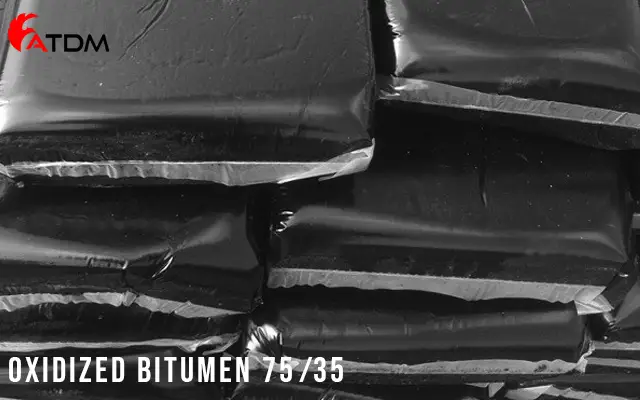
Bitumen 75/35 is a high-performance oxidized asphalt grade designed for roofing membranes, waterproofing systems, insulation boards, and heavy-duty industrial applications that demand durability, structure, and thermal stability. When projects require a material that resists flow at high temperatures yet maintains workable flexibility during application, bitumen 75/35 becomes the smart operational choice. It is widely used by contractors, membrane manufacturers, and industrial plants that need consistent softening point, controlled penetration, and long-term resistance to aging.
In real projects, material stability is not optional. I have seen roofing lines stop because the bitumen flowed too fast in summer heat. I have seen waterproofing layers crack because the grade was too brittle. That is exactly why bitumen 75/35 exists — it balances hardness and flexibility in a way that supports production lines and job sites without surprises.
Bitumen 75/35 is an oxidized (blown) bitumen grade produced by controlled air blowing of penetration bitumen under specific temperature and pressure conditions. The numbers 75/35 typically refer to:
Table of Contents
ToggleSoftening Point: Approximately 75°C
Penetration at 25°C: Around 35 dmm
This structure gives the product higher thermal resistance compared to penetration grades, while still maintaining workable application characteristics.
Unlike road bitumen that must handle traffic load and flexibility, bitumen 75/35 is engineered for structural integrity in roofing and waterproofing. It does not behave like standard paving asphalt. It behaves like a designed industrial binder.
When buyers search for an experienced bitumen 75/35 supplier, they are usually looking for consistency — not just product availability. Because in blown grades, production control defines quality.
The performance of oxidized bitumen 75/35 depends heavily on how it is produced.
In the oxidation unit, hot penetration bitumen is exposed to controlled air injection. This reaction increases molecular weight and alters the structure of the binder. As a result:
Softening point increases
Penetration decreases
Temperature susceptibility improves
Flow resistance at high temperature becomes stronger
However, over-blowing creates brittleness. Under-blowing causes flow problems. So balance is critical.
This is why professional buyers prefer experienced producers of blown asphalt 75/35 instead of traders who cannot confirm oxidation parameters.
A standard specification range may include:
Softening Point: 70–80°C
Penetration (25°C): 30–40 dmm
Loss on Heating: Minimal
Flash Point: Above 230°C
Solubility in CS₂: ≥ 99%
Ductility: Controlled (lower than paving grades)
The elevated softening point ensures dimensional stability in hot climates. Meanwhile, the penetration value ensures the grade is not overly brittle.
In industrial roofing production lines, this balance makes bitumen 75/35 reliable for:
APP and SBS membrane coating
Roofing felt saturation
Waterproofing compound blending
Pipe coating mixtures
Insulation board lamination
Membrane producers require a grade that:
Maintains film thickness
Does not sag under high temperature
Bonds strongly to reinforcement layers
Oxidized bitumen 75/35 offers structural stability during both coating and final installation. It holds shape under sun exposure, which reduces deformation risk.
In basement waterproofing and foundation coating, flow resistance is critical. When heated and applied properly, bitumen 75/35 forms a protective barrier against moisture penetration.
oxidized grade 75/35 is also used in anti-corrosion coating blends. In some formulations, it is combined with fillers or reinforcing materials like gilsonite to increase hardness and chemical resistance.
Gilsonite addition can improve gloss, hardness, and durability — especially in industrial pipe coatings.
From experience, procurement managers ask three main questions:
Will it hold under heat?
Will it crack under mild cold?
Is supply stable?
Bitumen 75/35 answers the first two with its thermal balance. The third depends on the bitumen 75/35 supplier.
In Middle Eastern, African, and South Asian climates, roofing materials face intense sunlight. A lower softening point grade may deform. This is where oxidized bitumen 75/35 performs reliably.
Bitumen 75/35 is typically supplied in:
25 kg Kraft paper bags
50 kg Kraft bags
150 kg steel drums
180 kg steel drums
Jumbo bags (500–1000 kg)
Bulk tanker (for specific projects)
For export shipments, drum and jumbo bag options are common. Buyers must consider unloading facilities and melting systems before selecting packaging.
From a logistics standpoint, oxidized grades are easier to store than cutback materials because they are solid at ambient temperature.
To maintain quality:
Store in dry, covered areas
Avoid direct sunlight exposure on packaging
Heat gradually to recommended temperature (usually 180–220°C for application)
Prevent overheating beyond flash point
Improper heating damages molecular structure. Controlled melting ensures the performance of bitumen 75/35 remains intact.
Many buyers compare this grade with BITUMEN 115/15.
The difference is clear:
115/15 has higher softening point
115/15 is harder and more brittle
75/35 offers more balance between hardness and workability
For moderate climates and standard roofing, bitumen 75/35 is often more economical and practical.
When projects demand extreme hardness, then bitumen 115/15 may be selected.
Buyers always monitor BITUMEN PRICE fluctuations because base feedstock affects oxidized grade cost.
The final BITUMEN PRICE of 75/35 depends on:
Base penetration bitumen cost
Oxidation process expenses
Packaging type
Crude oil market trend
Export destination
Compared to polymer modified grades, bitumen 75/35 remains cost-effective while still delivering structural stability.
Before shipment, responsible producers conduct:
Penetration test (ASTM D5)
Softening point test (ASTM D36)
Flash point test
Solubility test
Loss on heating
Independent inspection can also be arranged at loading port. For industrial buyers, COA transparency builds trust.
When selecting a bitumen 75/35 supplier, evaluate:
Production capacity
Oxidation control technology
Export experience
Packaging flexibility
COA reliability
Response time
Blown bitumen quality is process-dependent. A stable refinery system ensures consistency batch after batch.
In countries with surface temperatures exceeding 60°C, roofing materials must resist flow and deformation. Bitumen 75/35’s higher softening point makes it suitable for:
GCC countries
North Africa
South Asia
Sub-Saharan Africa
Under strong sun exposure, oxidized bitumen 75/35 maintains structural integrity better than lower softening point grades.
Although solid at ambient temperature, heated bitumen emits fumes. Therefore:
Ensure proper ventilation
Use protective gloves and face shield
Avoid water contact with hot material
Follow MSDS instructions
When handled correctly, bitumen 75/35 is safe for industrial application.
Despite the introduction of modified binders, oxidized grade 75/35 continues to dominate traditional roofing systems because:
It is reliable
It is cost-effective
It is easy to blend
It has predictable behavior
It is globally available
Contractors prefer materials that behave consistently year after year. And oxidized bitumen 75/35 does exactly that.
Bitumen 75/35 stands as a balanced oxidized asphalt grade designed for roofing, waterproofing, and industrial coating systems. It combines a solid softening point with controlled penetration, ensuring dimensional stability under heat while maintaining workable flexibility during application.
For membrane factories, waterproofing contractors, and industrial compound manufacturers, selecting the right bitumen 75/35 supplier is as important as choosing the grade itself.
In an industry where performance failures cost money and reputation, blown asphalt 75/35 offers a dependable solution that supports real operational needs — not just specifications on paper.