
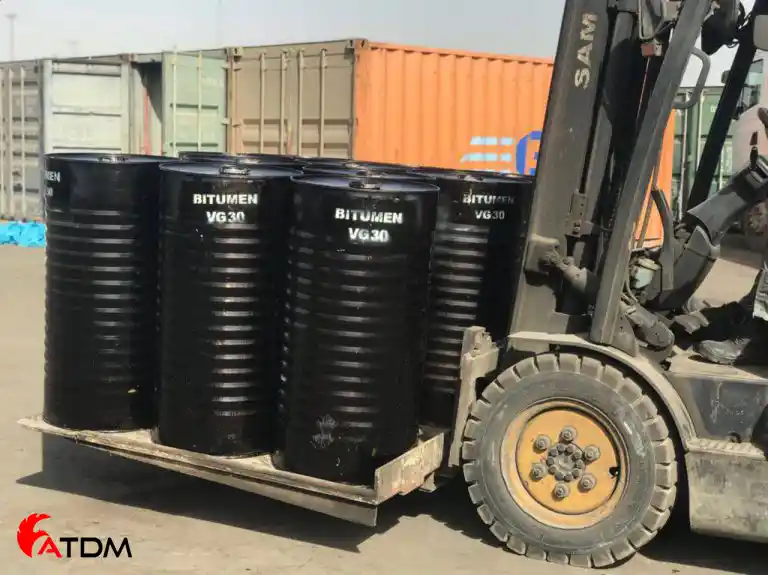
Bitumen VG 30 is a viscosity grade bitumen designed for heavy-duty pavements, highways, and infrastructure projects that demand strength, flexibility, and long service life. Unlike penetration grades, this material is classified based on its viscosity at specific temperatures, which makes performance more predictable in real construction conditions. Contractors prefer it for national highways, airport runways, and urban expressways where traffic load and climate stress are high.
If you are searching for reliable supply, stable quality, and consistent specification compliance, understanding the real behavior of VG 30 bitumen is more important than just reading a data sheet. Below, you will find a complete and practical guide written for engineers, contractors, and procurement managers who work with asphalt every day.
Viscosity grading focuses on how the binder flows at 60°C and 135°C. This approach reflects how the material behaves during mixing and laying, not just under laboratory needle penetration tests.
Table of Contents
ToggleBitumen VG 30 is engineered for:
Heavy traffic roads
High temperature regions
Structural asphalt layers
Dense Bituminous Macadam (DBM)
Bituminous Concrete (BC)
Because viscosity is controlled within a defined range, pavement designers can calculate mixing temperature, compaction temperature, and binder film thickness more accurately.
Traditional penetration grades measure hardness at 25°C. However, road performance depends more on behavior at higher service temperatures. That is why viscosity grade systems were introduced.
Bitumen VG 30 has:
Controlled absolute viscosity at 60°C
Defined kinematic viscosity at 135°C
High softening resistance
Balanced ductility
This grading system reduces guesswork. When engineers specify VG 30, they are choosing a binder that performs consistently under heat and traffic load.
Bitumen VG 30 is widely used in:
National highways
Expressways
Urban arterial roads
Industrial pavement zones
Toll roads
Airport taxiways
In hot climates or regions with heavy axle load, this grade performs better than softer binders. For medium traffic conditions, designers may compare it with BITUMEN VG 20, which is slightly softer and suited for moderate temperature regions.
One of the most searched topics is vg 30 bitumen temperature behavior. Contractors need to know:
Mixing temperature range
Compaction temperature
Safe storage temperature
Flash point
Typical working guidelines:
Mixing: 150–165°C
Compaction: 140–155°C
Storage: Below 170°C
Flash point: Above 220°C
Because VG 30 has higher viscosity, it resists rutting in hot weather. That makes it ideal for countries with intense summer heat.
Another common query is bitumen vg 30 density. Density affects transportation planning, tank calibration, and quantity calculations.
Typical properties:
Density at 25°C: Approx. 1.01–1.06 g/cm³
Absolute viscosity at 60°C: 2400–3600 Poise
Kinematic viscosity at 135°C: Min 350 cSt
Softening point: Around 47–55°C
Penetration at 25°C: Controlled within specification
Higher density compared to lighter grades means improved film thickness around aggregates, resulting in better adhesion and durability.
From real project experience, Bitumen VG 30 gives:
Better rutting resistance
Lower bleeding risk
Improved load distribution
Stronger aggregate bonding
Longer maintenance intervals
When the sub-base and aggregate grading are correct, VG 30 becomes a stable structural binder that can handle heavy truck movement without premature deformation.
Many buyers search for bitumen rate vg 30 to compare suppliers. However, the rate depends on several factors:
Crude oil fluctuation
Refinery production cost
Export logistics
Packaging type (bulk, drum, jumbo bag)
Regional demand
Seasonal construction peak
Bulk cargo shipments are typically more economical for large infrastructure projects. Drum packaging may increase handling cost but simplifies storage for smaller contractors.
The bitumen vg 30 price is directly influenced by global crude trends and refinery output. During peak construction seasons, demand increases and prices may rise accordingly.
Procurement teams should always:
Check latest refinery updates
Confirm specification compliance
Compare delivered CIF cost vs FOB
Evaluate supplier reputation
Many contractors also track the general bitumen price trend before signing long-term agreements. Strategic buying can reduce project cost significantly.
High-quality VG 30 must pass strict testing before dispatch:
Absolute viscosity test
Kinematic viscosity test
Flash point test
Ductility test
Softening point test
Loss on heating
Professional suppliers conduct batch-wise laboratory analysis and provide a Certificate of Analysis (COA) for each shipment. This ensures traceability and consistent performance.
ATDM supplies viscosity grade bitumen under strict inspection protocols. Each batch is tested before loading, ensuring conformity with national and international standards.
Proper handling ensures performance is not compromised:
Avoid overheating above recommended temperature
Use calibrated thermometers in storage tanks
Maintain continuous circulation if stored long term
Prevent water contamination
Clean tanks before refilling
Water contamination can cause foaming during heating. Therefore, tank inspection before loading is critical.
In mix design, VG 30 provides:
Stable Marshall stability values
Reduced permanent deformation
Improved fatigue resistance
Enhanced binder-aggregate adhesion
It performs especially well in Dense Bituminous Macadam (DBM) layers where structural strength is required.
When designed properly, pavement life can extend significantly, reducing maintenance cycles and lifecycle cost.
VG 30 is exported in:
Bulk vessel
Bitumen drums (180 kg)
Jumbo bags
Bitutainers
Tank trucks
For international buyers, documentation usually includes:
Commercial invoice
Packing list
Certificate of Origin
COA
MSDS
ATDM supports international contractors and distributors with consistent export logistics and transparent documentation. The company has experience handling bulk shipments for highway and infrastructure projects.
VG 30 is stronger than VG 10 and VG 20. It provides:
Higher stiffness
Better rut resistance
Suitable for hot climate
Designed for heavy traffic
However, in cold regions, softer grades may be more appropriate to prevent cracking. Therefore, climate and load condition must guide selection.
VG 30 should be handled carefully:
Use protective gloves and face shield
Avoid skin contact at high temperature
Ensure proper ventilation during heating
Prevent spillage near water bodies
Although bitumen is not classified as highly hazardous, heated material can cause serious burns. Proper safety protocols must always be followed.
In large infrastructure projects, supply interruption can delay the entire construction schedule. That is why working with experienced suppliers is critical.
A professional supplier ensures:
Consistent viscosity range
Stable density
On-time dispatch
Laboratory verified quality
Transparent pricing structure
ATDM has positioned itself as a reliable partner for contractors seeking long-term cooperation in viscosity grade bitumen supply.
Bitumen VG 30 is not just another road binder. It is a high-performance viscosity grade designed for demanding traffic and high temperature environments. Its controlled viscosity ensures predictable performance during mixing, compaction, and long-term service.
If your project involves highways, expressways, airport pavements, or heavy industrial roads, VG 30 provides the structural strength required to resist rutting and deformation.
When selecting a supplier, focus on:
Verified laboratory testing
Transparent documentation
Export experience
Stable pricing structure
Technical support availability
A well-chosen VG 30 supplier can directly influence pavement durability, maintenance cost, and overall project success.
For infrastructure professionals who prioritize durability, structural performance, and predictable viscosity behavior, VG 30 remains one of the most trusted viscosity grade binders in modern road construction.