
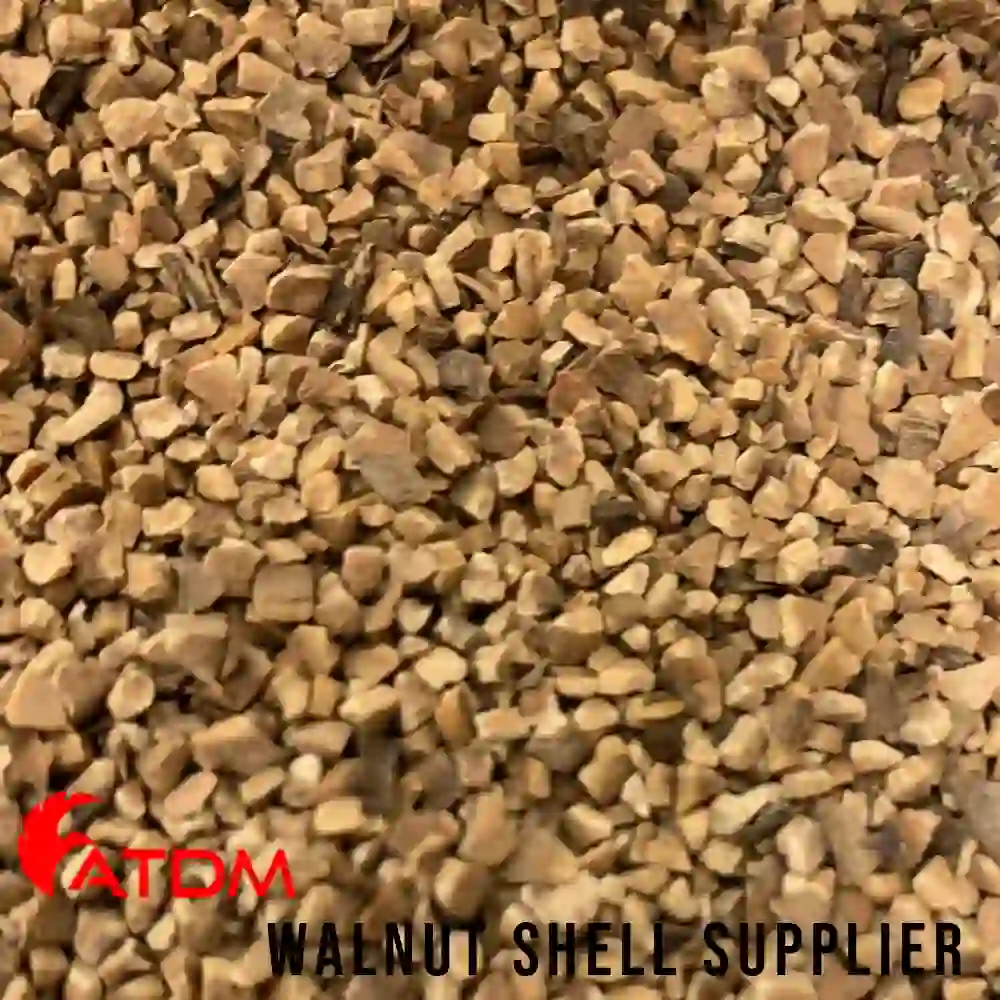
Walnut shell media is a natural, biodegradable abrasive produced from cleaned and graded nut shells, widely used in industrial cleaning, surface preparation, and filtration systems. It matters because it removes coatings, residues, and contaminants without damaging sensitive surfaces or altering tight tolerances. Engineers, maintenance teams, and procurement managers rely on this material when controlled abrasion, low dust, and environmental safety are essential. Choosing the right grade and a dependable supplier determines whether the material performs consistently or creates operational issues.
This abrasive comes from the hard outer shell of walnuts after food processing. Industrial producers wash, dry, crush, and sieve the shells into defined particle ranges. That controlled process transforms an agricultural by-product into a predictable industrial consumable.
In real operations, performance depends far more on processing quality than on the raw shell itself. Poorly screened material introduces dust, fibers, or mixed particle sizes that reduce cleaning efficiency and increase equipment wear. Properly processed media flows smoothly through blasting systems and maintains stable behavior during use.
Table of Contents
ToggleThis material fills an important gap between soft organic cleaners and aggressive mineral abrasives. It cleans effectively while preserving base materials.
From practical field experience, users value it because it:
Removes paint, grease, carbon, and residues without pitting metal
Protects aluminum, brass, composites, and plastics
Reduces rework caused by surface damage
Produces lower dust compared to sand or slag
Facilities that maintain precision components often switch to this option after experiencing surface damage from harder blasting media.
Surface Cleaning and Maintenance
Maintenance teams use this media to clean engine parts, molds, electrical housings, turbine components, and tooling. It strips contaminants while maintaining dimensional accuracy.
In automotive and aerospace plants, operators rely on it for mold and die cleaning where steel shot or garnet would be too aggressive.
Oil, Gas, and Petrochemical Operations
In petrochemical environments, this material serves two practical roles:
Filtration media in produced water and wastewater treatment units
Cleaning media for valves, flanges, and sensitive equipment
Because it resists crushing under moderate pressure, it maintains permeability in filter beds and reduces frequent media replacement.
Plastics, Rubber, and Composite Manufacturing
Manufacturers use it to clean molds without scratching polished surfaces. This reduces downtime, extends tool life, and lowers overall maintenance costs.
Polishing and Deburring
Fine particle grades work well in vibratory finishing systems. They smooth edges, remove light oxidation, and clean delicate parts without altering geometry.
This media performs well when used correctly, but it is not a universal solution. Experienced buyers evaluate it based on these properties:
Moderate hardness: Cleans without aggressive cutting
Low bulk density: Limits impact force on surfaces
Controlled breakdown: Particles dull gradually instead of fracturing sharply
Absorption capacity: Helps remove oils and residues
These characteristics make it ideal for gentle cleaning and filtration, not for heavy rust removal or surface profiling.
Particle size directly affects cleaning speed, finish quality, and media consumption. Selecting the wrong range often leads to poor results or unnecessary waste.
| Particle Range | Typical Use |
|---|---|
| Coarse grades | Heavy contamination removal |
| Medium grades | General cleaning and blasting |
| Fine grades | Polishing and delicate components |
A knowledgeable walnut shell supplier helps match particle size to air pressure, nozzle diameter, and surface sensitivity.
From procurement experience, most performance complaints trace back to inconsistent quality rather than material limitations. Buyers should request clear specifications covering:
Particle size distribution
Maximum moisture content
Dust and fiber limits
Absence of stones or foreign materials
Although no single ASTM standard governs this product, reputable suppliers apply internal quality controls aligned with ISO-style batch management.
This material is easy to store, but improper handling reduces effectiveness.
Best practices include:
Store in dry, covered conditions
Seal opened bags to prevent moisture uptake
Avoid long exposure to high humidity
When stored correctly, performance remains stable over extended periods.
From a safety and compliance perspective, this media offers several advantages:
Renewable and biodegradable
Low free-silica content
Non-sparking behavior
Standard dust control and personal protective equipment remain necessary during blasting or bulk handling.
A professional supplier does more than deliver bags. In practice, reliable partners provide:
Consistent grading across shipments
Stable supply for contract volumes
Application guidance based on real operations
Flexible packaging options
ATDM works with industrial buyers who need predictable performance, clear documentation, and dependable logistics rather than exaggerated claims.
Honest evaluation is essential. This media is not suitable for:
Removing heavy corrosion or mill scale
Creating aggressive surface profiles for coatings
High-temperature blasting environments
In those cases, mineral or metallic abrasives perform better.
Walnut shell media is a practical solution for industrial cleaning, gentle blasting, filtration, and finishing where surface protection matters. It delivers controlled abrasion, low dust, and environmental benefits when processed and graded correctly. If your operation requires cleaning without damage, this material fits well. The next step is to review particle size, quality requirements, and packaging options with a trusted supplier to confirm compatibility with your equipment and application.