
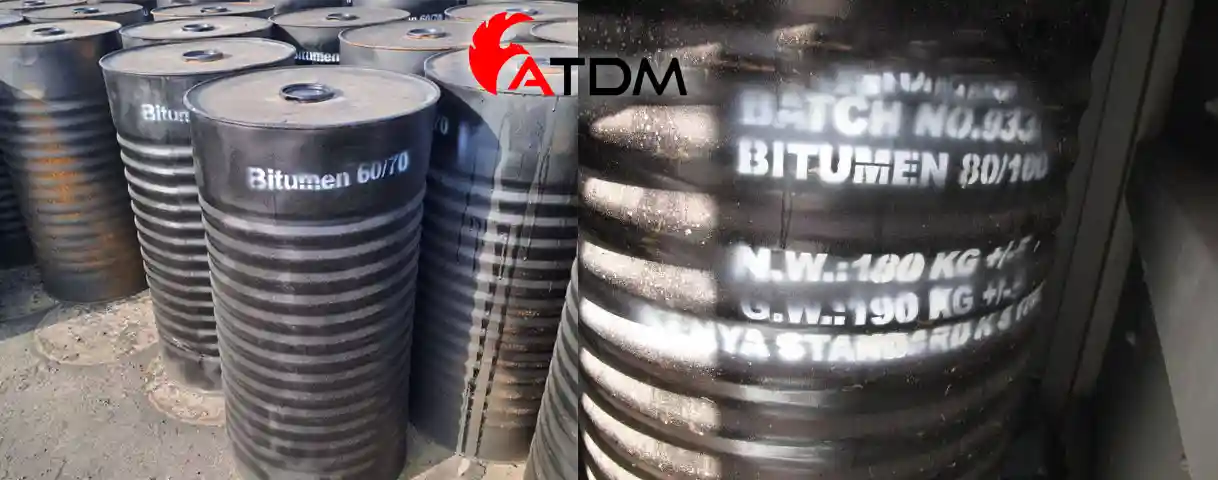
Choosing between bitumen 60/70 vs 80/100 can directly affect pavement strength, road durability, asphalt performance, and project cost. Contractors, asphalt plant operators, road builders, and procurement teams compare these two paving grades because both grades serve major infrastructure projects, yet each grade performs better under different traffic loads, weather conditions, and mix designs.
Bitumen 60/70 and bitumen 80/100 both belong to penetration grade bitumen. However, their penetration values, hardness, softening behavior, temperature resistance, and asphalt mix performance differ. Therefore, engineers select the right grade after checking climate, road type, traffic volume, aggregate structure, and expected service life.
Bitumen 60/70 vs 80/100: Main Technical Difference
The biggest difference between bitumen 60/70 vs 80/100 comes from penetration value. Bitumen 60/70 has a penetration range of 60 to 70 dmm, while bitumen 80/100 has a penetration range of 80 to 100 dmm. As a result, bitumen 60/70 offers a harder and stiffer binder, while bitumen 80/100 provides a softer and more flexible binder.
Table of Contents
ToggleBecause bitumen 60/70 has lower penetration, it resists deformation better in hot weather and heavy traffic. In contrast, bitumen 80/100 performs better in cooler climates because it offers more flexibility and better resistance against thermal cracking.
Therefore, the comparison of bitumen 60/70 vs bitumen 80/100 mainly depends on hardness, flexibility, climate, and road load.
Hardness and Penetration Comparison
Bitumen 60/70 grade delivers higher hardness than bitumen 80/100. This harder structure helps asphalt pavement handle heavy vehicles, high axle loads, and intense traffic pressure. For this reason, highway projects, airport roads, industrial zones, and urban roads often use bitumen penetration grade 60/70.
On the other hand, bitumen 80/100 grade gives asphalt mixtures more workability and flexibility. This softer grade helps contractors achieve better compaction in lower-temperature regions. Moreover, it reduces the risk of cracking when pavement faces cold nights, seasonal temperature drops, or freeze-thaw cycles.
So, when buyers compare 60/70 bitumen vs 80/100 bitumen, they should focus on stiffness and flexibility first.
Climate Suitability
Climate plays a major role in the choice between bitumen 60/70 vs 80/100. In hot climates, road surfaces absorb strong sunlight and reach high pavement temperatures. Under these conditions, soft binders may rut, bleed, or deform. Therefore, bitumen 60/70 works better in hot regions because it maintains stronger shape stability.
Meanwhile, bitumen 80/100 performs well in cold and moderate climates. Since it remains softer, it handles contraction and expansion more effectively. Also, it supports asphalt flexibility during temperature changes.
For tropical regions, desert areas, warm countries, and high-temperature road projects, bitumen 60/70 usually gives better results. For colder regions, mountain roads, rural roads, and moderate-weather locations, bitumen 80/100 often becomes the preferred paving grade.
Traffic Load and Road Performance
Traffic volume also decides the best grade. Heavy-duty roads need a binder that can resist rutting, pushing, and permanent deformation. Because of that, bitumen 60/70 suits highways, main roads, expressways, bus lanes, ports, and airport pavements.
However, roads with light to medium traffic can perform well with bitumen 80/100. This grade works effectively for residential streets, local roads, parking areas, rural routes, and maintenance works. Additionally, bitumen 80/100 allows easier asphalt handling during mixing, laying, and compaction.
Therefore, in the discussion of bitumen 60/70 vs 80/100 for road construction, bitumen 60/70 supports stronger load resistance, while bitumen 80/100 supports easier workability and better flexibility.
Asphalt Mix Workability
Bitumen 80/100 offers better workability during asphalt production. Because it has a softer consistency, asphalt plants can mix aggregates and binder more easily. Contractors can also compact the asphalt layer with less effort, especially in cooler weather.
Bitumen 60/70 requires more controlled heating and proper mixing conditions. However, it rewards the project with better stiffness, stronger structure, and higher resistance to deformation. Therefore, experienced asphalt producers often choose bitumen 60/70 for demanding road construction projects.
In simple terms, 80/100 bitumen vs 60/70 bitumen shows a clear trade-off: bitumen 80/100 gives easier application, while bitumen 60/70 gives stronger long-term stability.
Softening Point and Temperature Resistance
Bitumen 60/70 generally has a higher softening point than bitumen 80/100. This means it can tolerate higher pavement temperatures before it starts to soften. Consequently, it reduces the risk of rutting, bleeding, and surface waves.
Bitumen 80/100 softens more easily because it has a higher penetration value. However, that softness helps it resist cracking in colder environments. Therefore, project engineers must balance temperature resistance and flexibility before choosing a grade.
When the project faces strong heat and heavy loads, bitumen 60/70 becomes the safer option. When the project faces cooler weather and lower loads, bitumen 80/100 becomes more practical.
Durability and Service Life
Road durability depends on binder quality, aggregate grading, asphalt mix design, drainage, compaction, and traffic conditions. Still, the right bitumen grade strongly affects pavement life. Bitumen 60/70 can increase asphalt durability in hot and high-traffic areas because it keeps the pavement firm and stable.
Bitumen 80/100 can increase durability in cooler climates because it prevents early cracking and improves flexibility. As a result, neither grade always beats the other. Instead, each grade delivers better performance in the right environment.
Therefore, the best answer to which is better, bitumen 60/70 or 80/100, depends on project conditions rather than one universal rule.
Common Applications of Bitumen 60/70
Contractors widely use bitumen 60/70 for asphalt roads, highways, airport runways, bridge decks, industrial pavements, heavy-traffic roads, and hot-climate infrastructure. It also works well in dense asphalt concrete, binder courses, and wearing courses where strong resistance matters.
Because of its balanced hardness and performance, many road authorities and asphalt producers treat bitumen 60/70 as a standard paving grade for demanding projects. Moreover, many buyers search for
Common Applications of Bitumen 80/100
Bitumen 80/100 works well for road construction in cold and moderate climates. Contractors use it for local roads, low-traffic roads, flexible pavements, surface dressing, asphalt repair, and general paving projects. It also supports asphalt mixtures that need better compaction and flexibility.
Bitumen 60/70 vs 80/100 Price
The price of bitumen 60/70 and 80/100 changes according to crude oil prices, refinery output, packing type, shipping route, order volume, and destination port. Usually, both grades stay close in price, but market demand can create small differences.
Bulk supply, jumbo bags, steel drums, and bitutainers can also affect final cost. Therefore, buyers should compare not only the base price but also packing quality, loading capacity, delivery time, inspection reports, and export documentation.
ATDM supplies both bitumen 60/70 and bitumen 80/100 for international buyers. The company supports road contractors, asphalt producers, traders, and infrastructure suppliers with export-ready packing, quality control, and shipment coordination.
How to Choose Between Bitumen 60/70 and 80/100
Choose bitumen 60/70 when the project needs higher hardness, better rutting resistance, stronger pavement structure, and better performance in hot climates. Also, select this grade for highways, main roads, heavy traffic, industrial areas, and airport pavement.
Choose bitumen 80/100 when the project needs more flexibility, easier compaction, better cold-weather behavior, and smoother asphalt handling. Also, select this grade for colder climates, light traffic roads, local routes, and general paving works.
As a result, the right choice in bitumen 60/70 vs 80/100 depends on temperature, load, pavement design, and performance targets.
Final Comparison: bitumen 60/70 vs 80/100
Bitumen 60/70 delivers harder consistency, stronger deformation resistance, and better performance in hot climates. Meanwhile, bitumen 80/100 delivers softer consistency, better flexibility, and easier workability in cold or moderate climates.
For heavy-duty road construction, bitumen 60/70 usually offers the better option. For flexible paving in cooler conditions, bitumen 80/100 usually gives better results. Therefore, buyers should review project specifications before placing an order.
ATDM stands as a reliable supplier of bitumen 60/70 and bitumen 80/100, offering both grades for road construction, asphalt production, and export markets. With the right grade selection, contractors can improve pavement performance, reduce maintenance risks, and achieve stronger long-term results.