
The comparison of Bitumen Membrane vs PVC Membrane plays a critical role in modern roofing decisions. Contractors and property owners rely on accurate data to choose the right waterproofing system. While both materials serve the same purpose, their performance varies significantly across lifespan, cost, installation, and durability.
This article presents a clear, data-driven comparison of Bitumen Membrane vs PVC Membrane, helping you evaluate which option delivers better long-term value.
Bitumen Membrane vs PVC Membrane: Material Composition
Material structure directly affects performance, flexibility, and durability.
Table of Contents
ToggleBitumen membranes consist of asphalt modified with polymers such as SBS or APP. These systems usually include reinforcement layers like polyester or fiberglass, making them thicker and multi-layered.
In contrast, PVC membranes are single-ply systems made from thermoplastic material. They include plasticizers and reinforcement layers that enhance flexibility and strength. This difference in composition makes Bitumen Membrane vs PVC Membrane a key consideration for engineers focused on long-term performance.
Bitumen Membrane vs PVC Membrane: Durability and Lifespan
Durability remains one of the most important factors in roofing selection.
Bitumen membranes typically last between 15 and 25 years. Their performance depends heavily on installation quality and environmental conditions.
PVC membranes, however, offer a longer lifespan of 20 to 30 years. They resist UV radiation, chemicals, and environmental stress more effectively.
When analyzing Bitumen Membrane vs PVC Membrane, PVC clearly provides a longer service life with more consistent performance over time.
Installation Comparison
Installation complexity directly impacts labor costs and project timelines.
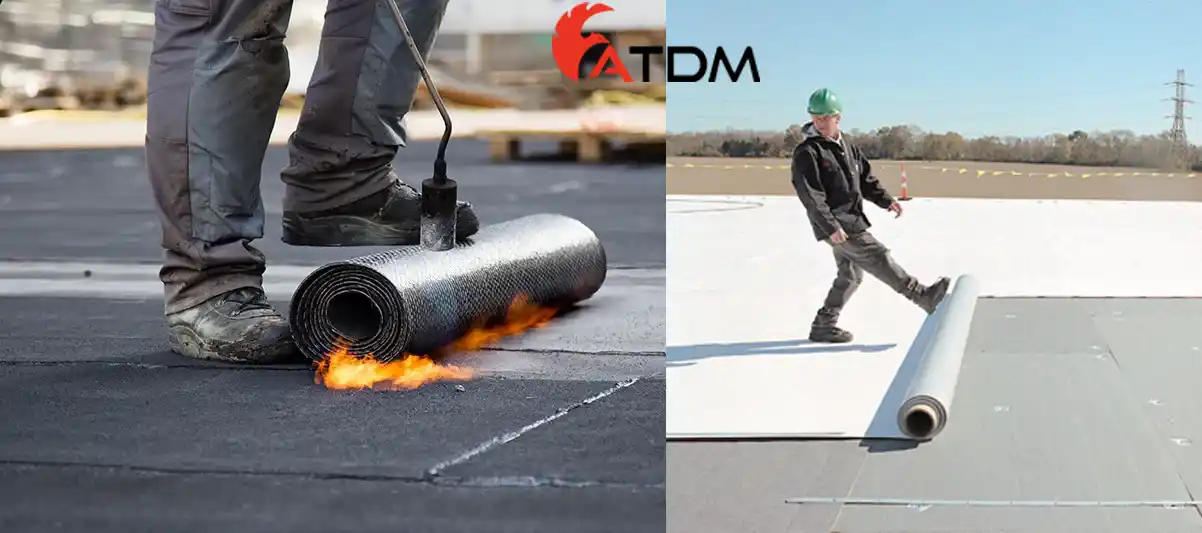
Bitumen systems require multiple layers and often involve torch application or adhesives. This process increases labor intensity and installation time.
PVC membranes use heat-welded seams, which create strong, uniform bonds. Installers can complete projects faster with fewer layers.
As a result, in the debate of Bitumen Membrane vs PVC Membrane, PVC stands out for efficiency and reduced labor requirements.
Bitumen Membrane vs PVC Membrane: Cost Analysis
Cost evaluation must include both initial investment and long-term value.
Bitumen membranes offer a lower upfront cost, making them attractive for budget-sensitive projects. However, they often require more maintenance and repairs over time.
PVC membranes come with a higher initial price but deliver better long-term savings due to durability and lower maintenance needs. Many contractors prefer sourcing materials from reliable suppliers like ATDM to ensure consistent product quality and performance.
In the full comparison of Bitumen Membrane vs PVC Membrane, PVC proves more cost-effective over the lifespan of the roof.
Waterproofing Performance
Waterproofing efficiency determines how well a membrane prevents leaks.
Bitumen membranes rely on overlapping layers, which may weaken over time and increase the risk of water infiltration.
PVC membranes use heat-welded seams that create a continuous, watertight barrier. These seams often become stronger than the membrane itself.
This makes Bitumen Membrane vs PVC Membrane an important comparison when leak prevention is a top priority.
Flexibility and Temperature Resistance
Roofing materials must adapt to changing temperatures without losing performance.
Bitumen membranes can become brittle in cold weather and soften under extreme heat. This limits their performance in harsh climates.
PVC membranes maintain flexibility across a wide temperature range. They perform well in both hot and cold environments without cracking or deforming.
In terms of Bitumen Membrane vs PVC Membrane, PVC offers superior thermal stability and flexibility.
Maintenance Requirements
Maintenance frequency affects long-term costs and reliability.
Bitumen systems require regular inspections and repairs due to seam vulnerability and material aging.
PVC membranes need less maintenance because of their durable structure and strong seams. This reduces long-term operational costs.
When comparing Bitumen Membrane vs PVC Membrane, PVC clearly minimizes maintenance efforts.
Environmental Impact
Sustainability plays an increasing role in material selection.
PVC membranes are recyclable and reflect sunlight, which improves energy efficiency and reduces cooling costs.
Bitumen membranes rely on petroleum-based materials and have a higher environmental impact.
This makes Bitumen Membrane vs PVC Membrane a relevant comparison for environmentally conscious projects.
Safety and Fire Resistance
Safety during installation and operation is essential.
Bitumen membranes, especially torch-applied systems, pose a higher fire risk during installation.
PVC membranes offer better fire resistance and safer installation processes.
Many professionals choose trusted suppliers like ATDM to ensure high-quality PVC materials that meet safety standards.
Bitumen Membrane vs PVC Membrane: Data Comparison Table
| Feature | Bitumen Membrane | PVC Membrane |
|---|---|---|
| Lifespan | 15–25 years | 20–30 years |
| Installation | Multi-layer | Single-ply |
| Cost | Lower upfront | Higher upfront |
| Maintenance | Moderate to high | Low |
| Flexibility | Moderate | High |
| UV Resistance | Moderate | Excellent |
| Waterproofing | Good | Superior |
| Environmental Impact | Higher | Lower |
FAQs
1. Which is better: Bitumen Membrane vs PVC Membrane?
PVC performs better in durability, waterproofing, and lifespan, while bitumen is more affordable upfront.
2. Is PVC more expensive than bitumen?
Yes, PVC has a higher initial cost but offers better long-term value.
3. Which membrane lasts longer?
PVC membranes typically last 5–10 years longer than bitumen systems.
4. Which requires less maintenance?
PVC membranes require less maintenance due to stronger seams.
5. Are PVC membranes energy efficient?
Yes, they reflect sunlight and reduce cooling costs.
6. Is bitumen still widely used?
Yes, it remains popular for cost-sensitive projects.
Conclusion
The comparison of Bitumen Membrane vs PVC Membrane highlights clear differences in durability, cost, and performance. Bitumen offers affordability and simplicity, while PVC delivers long-term reliability and efficiency.
For projects focused on lifespan and minimal maintenance, PVC is the stronger choice. However, for lower initial budgets, bitumen remains a practical option.