
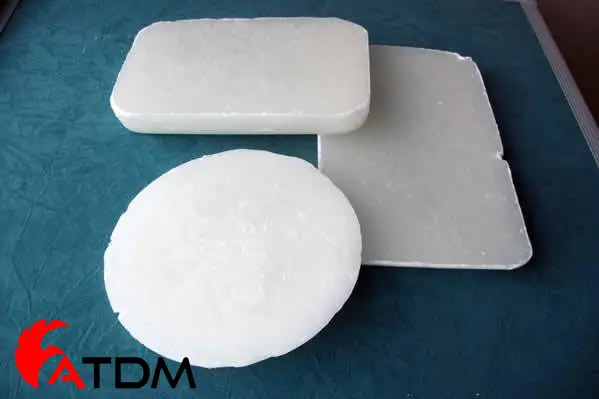
Paraffin wax is a petroleum-derived solid hydrocarbon used in many industries to control moisture resistance, surface protection, lubrication, and thermal behavior. Manufacturers rely on it because it melts within a predictable range, remains chemically stable during processing, and performs consistently in long production runs. For engineers, formulators, and procurement managers, this material often serves as the reference wax when cost control and reliability matter more than novelty.
What This Material Is and How Industry Produces It
Refineries obtain this wax during lubricating oil processing. After separating waxy hydrocarbons from base oil streams, producers further refine the solid fraction to meet specific requirements for oil content, melting behavior, color, and odor.
From an operational point of view, the value of Paraffin wax lies in its neutrality. It does not interfere with most polymers, resins, or additives. It also shows minimal chemical reactivity under normal industrial conditions, which makes it easy to integrate into existing formulations without redesigning the process.
Table of Contents
ToggleMany plants still prefer it over synthetic alternatives because it offers predictable behavior without increasing formulation risk.
Why Industry Continues to Use This Wax Material
Despite the availability of specialty and synthetic waxes, manufacturers continue to rely on petroleum-based waxes for practical reasons.
They offer:
Stable solid-to-liquid transition
Good compatibility with oils, polymers, and fillers
Reliable supply at scale
Simple processing with standard equipment
These advantages explain why Paraffin wax remains widely used in high-volume manufacturing rather than being replaced outright.
Main Grades Used in Industrial Applications
Buyers rarely choose wax based on name alone. Refinement level and oil content determine how the material behaves in real production environments.
Fully Refined Grades
Fully refined material contains very low residual oil, usually below 0.5%. Producers use these grades when appearance, odor neutrality, and purity are critical.
Typical applications include:
Cosmetic creams, balms, and sticks
Pharmaceutical ointments
High-quality candle production
Food-contact paper and packaging (when compliant)
Additional hydrotreatment removes aromatics and sulfur compounds that could affect smell or color.
Semi-Refined Grades
Semi-refined grades retain higher oil content, often between 1% and 3%. They perform well in mechanical or technical roles where visual purity is less important.
Common uses include:
Rubber and tire compounds
PVC processing
Industrial candles
Coated boards and cartons
Choosing the correct Paraffin wax grade helps prevent downstream issues such as surface migration or inconsistent hardness.
Key Technical Properties That Affect Performance
Engineers and quality teams evaluate wax performance using measurable characteristics rather than marketing labels.
Melting Range
Most industrial grades melt between 48 °C and 68 °C.
Higher melting ranges improve heat resistance and shape stability. Lower ranges improve flexibility and blending ease.
Oil Content
Oil level directly affects hardness, surface feel, and migration behavior.
Lower oil content provides:
Cleaner surface appearance
Better odor control
Improved stability in sensitive applications
Higher oil content offers:
Softer texture
Easier processing
Better compatibility in rubber systems
These factors often matter more than price when Paraffin wax feeds continuous production lines.
Color, Odor, and Hardness
Color and odor matter in consumer-facing products. Penetration and hardness values help predict how the material responds to pressure, stacking, or mechanical stress during use.
Practical Industrial Applications
Candle Manufacturing
Producers use this wax because it burns consistently, accepts fragrance oils well, and releases easily from molds. Many plants blend it with stearic acid or microcrystalline wax to fine-tune hardness and opacity.
Paper and Packaging
Wax-coated paper resists moisture and grease. The material applies evenly through dipping, spraying, or roll coating and solidifies quickly, which supports high-speed lines.
Rubber and Tire Production
Rubber manufacturers add wax components to protect surfaces from ozone cracking. Over time, the wax migrates outward and forms a protective film.
Cosmetics and Personal Care
In creams and ointments, refined wax provides structure, smooth texture, and a moisture barrier. Grade selection becomes critical in these applications to avoid odor or discoloration.
Adhesives and Hot-Melt Systems
Wax components modify viscosity, control open time, and reduce formulation cost. Paraffin wax often acts as a processing aid rather than a primary binder.
Quality Control and Testing Expectations
Reliable suppliers verify material properties using standardized test methods.
Common references include:
ASTM D87 for melting characteristics
ASTM D721 for oil content
ASTM D1500 for color
Buyers should always request:
Technical data sheets
Certificates of analysis for each shipment
Clear tolerance ranges for critical properties
Most processing complaints trace back to inconsistent quality rather than incorrect application of Paraffin wax.
Storage, Handling, and Processing Insights
This material stores easily, but poor handling still causes problems.
Store slabs or blocks in a dry, shaded environment. Avoid contamination with dust or foreign materials, especially for cosmetic or packaging grades.
During melting:
Use indirect heating
Avoid overheating to prevent discoloration
Maintain stable temperatures to preserve structure
Many defects blamed on Paraffin wax actually originate from poor temperature control.
Common Buyer Questions Answered Honestly
Is this material safe for sensitive applications?
Yes, when fully refined grades meet the required regulatory and quality standards.
Can synthetic waxes replace it?
In some cases, but synthetic options often increase cost and alter processing behavior without clear benefits.
Why does performance vary between suppliers?
Crude source, refining depth, and quality control practices differ significantly.
How to Select the Right Grade for Your Operation
Before requesting quotations, define your technical requirements:
Target melting range
Acceptable oil content
Color and odor limits
Compliance or regulatory needs
Then evaluate suppliers based on documentation quality, batch consistency, and logistics reliability—not price alone.
ATDM supplies industrial wax grades with consistent specifications and export-ready quality control, supporting manufacturers who value long-term stability.
Final Guidance for Engineers and Procurement Teams
Paraffin wax remains a core industrial material because it balances performance, availability, and cost. When buyers focus on measurable properties and real operating conditions, it delivers reliable results across many sectors.
Review specifications carefully, confirm quality documentation, and ensure the selected grade matches your application. The right choice simplifies production. The wrong one quietly increases cost and risk.