
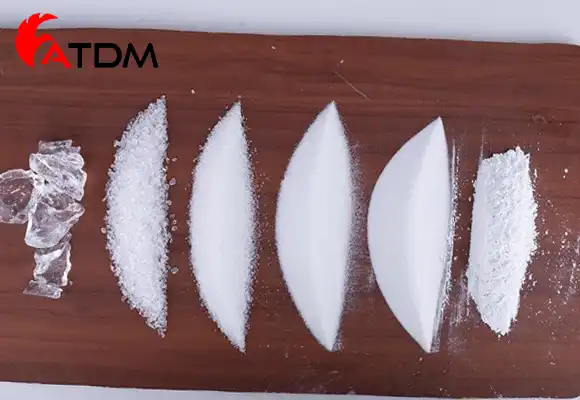
Micro silica also called silica fume is an ultrafine powder recovered during the production of silicon metal and ferrosilicon alloys, and it is used primarily to improve strength, durability, and chemical resistance in concrete and cement-based systems. It matters because its extremely small particle size fills micro-voids that ordinary cement cannot, creating denser and more durable structures. Engineers, concrete producers, refractory manufacturers, and industrial formulators use it when standard materials no longer meet performance requirements.
What Micro Silica Actually Is
In real industrial terms, micro silica is not just “fine silica.”
It is a by-product with a specific morphology and chemistry that changes how cementitious systems behave.
The particles are about 100 times smaller than cement grains.
They contain more than 85–95% amorphous silicon dioxide (SiO₂), depending on grade and source.
Table of Contents
ToggleThis combination creates two effects in concrete and mortars:
Physical filling of microscopic gaps
Chemical reaction with free calcium hydroxide
Together, these effects increase strength and reduce permeability.
That is why micro silica is chosen for high-performance applications, not because it is cheaper, but because it solves problems ordinary cement cannot.
Where Micro Silica Is Commonly Used in Industry
From experience, buyers usually come from a few key sectors. Each one uses micro silica for a different reason.
High-Performance Concrete and Infrastructure
This is the largest and most established use.
Micro silica is added to:
Bridge decks
Marine structures
Tunnels and dams
Industrial floors
High-rise and precast elements
The goal is not just higher compressive strength.
The real value is lower permeability, which protects steel reinforcement from corrosion.
In aggressive environments—chlorides, sulfates, freeze-thaw cycles—this makes a measurable difference in service life.
Oil, Gas, and Energy Projects
In oil and gas construction, micro silica helps control:
Cement slurry stability
Strength development under high temperature
Resistance to chemical attack
It is often specified when standard oilwell cement additives fail to meet long-term durability expectations.
Refractory and High-Temperature Materials
Refractory manufacturers use micro silica to:
Improve packing density
Reduce porosity
Enhance thermal shock resistance
In castables and gunning mixes, even small dosage changes can affect flow and final strength. This is one area where consistent quality matters more than price.
Fiber Cement and Special Mortars
In fiber cement boards, grouts, and repair mortars, micro silica:
Improves surface finish
Reduces cracking
Increases early strength
Producers often blend it with other mineral additives to balance workability and cost.
What Buyers Often Underestimate: Handling and Mixing Behavior
Micro silica behaves differently from cement or fly ash.
If you have worked with it, you already know:
It is very light
It creates dust easily
It affects water demand
Poor handling causes more problems than poor chemistry.
Common Practical Challenges
Dust generation during loading and mixing
Agglomeration if not dispersed properly
Reduced workability without correct superplasticizers
For this reason, many projects prefer densified micro silica instead of undensified powder. Densified material flows better and is easier to dose in batching plants.
Quality Parameters That Actually Matter
From a buyer’s perspective, not every specification line carries equal weight.
The most critical parameters are:
| Property | Why It Matters |
|---|---|
| SiO₂ content | Indicates reactivity and performance |
| Loss on ignition (LOI) | High LOI can signal carbon contamination |
| Bulk density | Affects handling and dosing |
| Moisture content | Impacts storage stability |
| Particle distribution | Influences dispersion and strength |
Reputable suppliers provide consistent test data aligned with standards such as ASTM C1240 or equivalent international specifications.
When sourcing micro silica, consistency across shipments is often more important than chasing the highest silica percentage.
How Much Micro Silica Is Typically Used?
There is no universal dosage.
In practice:
Concrete applications often use 5–10% by cement weight
High-performance mixes may reach 12–15%
Refractory and specialty formulations vary widely
Higher dosage does not automatically mean better performance.
At some point, workability loss outweighs strength gains.
Experienced engineers adjust dosage together with water reducers and aggregate grading.
Storage, Packaging, and Logistics Considerations
Micro silica is sensitive to poor storage conditions.
Common industrial packaging options include:
20–25 kg paper bags
Jumbo bags
Bulk tanker supply
Dry storage is essential.
Moisture pickup can cause lumping and handling problems before the material even reaches the mixer.
Export buyers usually prioritize suppliers who can:
Maintain stable bulk density
Prevent contamination
Provide consistent packaging across shipments
ATDM supplies micro silica for export markets where logistics reliability matters as much as laboratory results.
Limitations You Should Be Aware Of
Micro silica is not a universal solution.
It may not be suitable when:
Simple strength improvement is the only goal
Mixing equipment cannot handle fine powders
Cost sensitivity outweighs durability needs
In basic concrete applications, fly ash or slag may deliver acceptable results at lower cost.
Understanding why you need micro silica prevents unnecessary formulation complexity.
How to Decide If Micro Silica Fits Your Application
Before ordering, experienced buyers usually clarify three points:
Performance requirement (strength, durability, permeability)
Mixing capability (dispersion and dust control)
Consistency expectation (single project vs long-term supply)
If durability, long service life, or aggressive exposure conditions matter, micro silica is often justified.
If not, simpler mineral additives may be enough.
Final Practical Takeaway
Micro silica is a performance-driven material, not a commodity filler.
It earns its place in concrete, refractory, and industrial systems by delivering density, durability, and chemical resistance that standard binders cannot provide.
For engineers and procurement teams, the right decision depends on application demands, not trends or specifications alone. Reviewing technical data, handling methods, and supply consistency is the logical next step before committing to a grade or supplier.
If you need to evaluate specifications or match micro silica to a specific industrial use, that assessment should come before price discussions.