
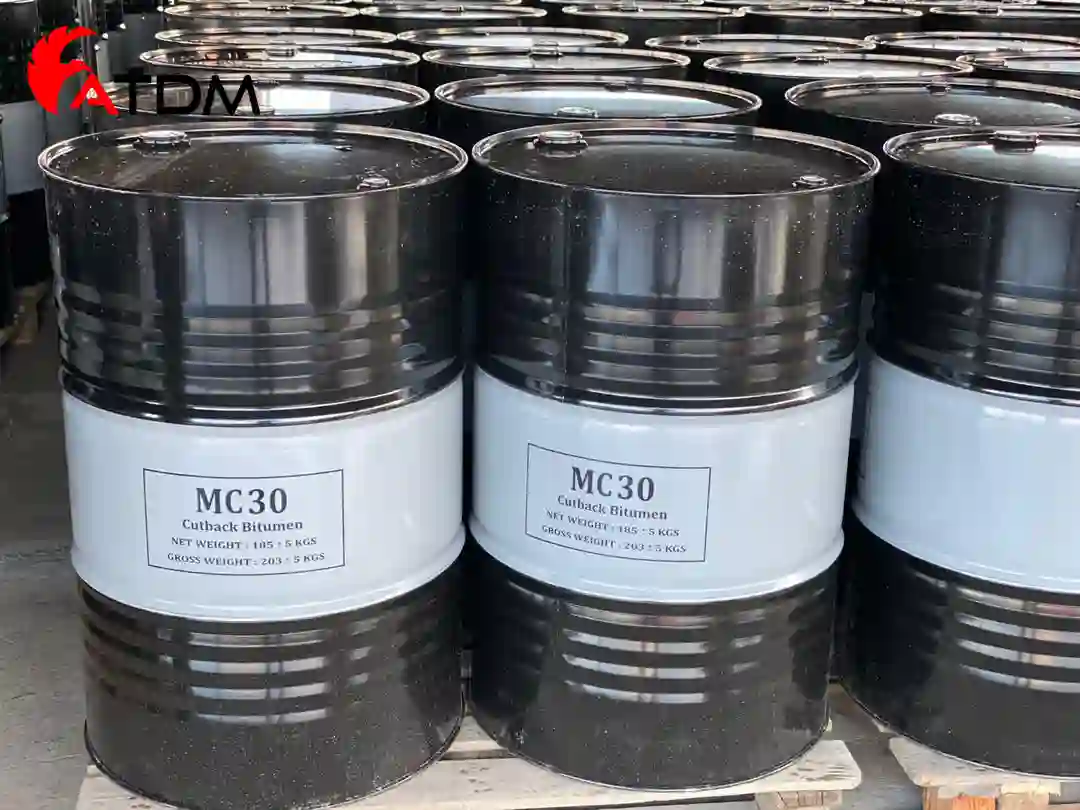
Cutback bitumen is a penetration-grade bitumen diluted with a controlled amount of petroleum solvent to reduce viscosity for easy spraying and mixing at ambient temperatures. It matters because it allows road works, surface treatments, and maintenance in cold weather or remote sites without heating equipment. Engineers, contractors, and procurement teams use it when hot bitumen is impractical, unsafe, or uneconomical, especially for prime coats, tack coats, and patching works.
In practice, cutback bitumen combines base bitumen with volatile solvents such as kerosene or naphtha. The solvent temporarily lowers viscosity. After application, the solvent evaporates, and the remaining binder performs like conventional bitumen.
Cutback bitumen is not emulsified bitumen. Emulsions use water and emulsifiers, while cutbacks rely on hydrocarbon solvents. This difference affects curing time, environmental considerations, and storage behavior.
Table of Contents
ToggleDespite stricter environmental controls, cutback bitumen remains relevant in specific conditions.
Engineers choose it when:
Ambient temperatures prevent proper flow of hot bitumen.
Heating facilities are unavailable or risky.
Rapid penetration into granular surfaces is required.
Short-term maintenance or spot repairs need fast mobilization.
In remote regions, cutback bitumen often reduces logistical complexity and project delays.
Cutback bitumen grades depend on solvent volatility and curing speed.
Rapid Curing (RC)
RC grades use highly volatile solvents.
Typical uses include:
Surface dressing
Spray sealing
Patch repairs where quick strength gain matters
RC grades cure fast but demand careful handling due to flammability.
Medium Curing (MC)
MC Cutback grades use less volatile solvents.
They work well for:
Prime coats on granular bases
Cold-mix asphalt preparation
Maintenance works with moderate traffic opening times
MC grades balance workability and curing speed.
Slow Curing (SC)
SC grades contain low-volatility oils.
They suit:
Stockpiled cold mixes
Dust control
Penetration macadam layers
SC grades cure slowly and allow extended working time.
Based on field experience, cutback bitumen performs best in the following roles:
Prime coats: It penetrates unbound base layers and prepares surfaces for asphalt overlays.
Tack coats: It improves adhesion between pavement layers in cool climates.
Cold mix asphalt: It enables asphalt production without heating aggregates.
Maintenance and patching: It simplifies rapid repairs with limited equipment.
Rural and remote roads: It reduces reliance on hot-mix plants.
Each application demands the right curing grade and solvent balance.
Not all cutback bitumen behaves the same. Buyers should evaluate performance beyond basic grade names.
Important factors include:
Base bitumen quality: Penetration and softening point influence final binder strength.
Solvent type and ratio: This controls curing speed and safety.
Residue properties: After evaporation, the remaining binder must meet performance expectations.
Climatic conditions: Temperature and wind affect curing time.
Traffic opening requirements: Faster curing grades reduce downtime.
Field trials often prevent costly mismatches between grade and application.
Reputable suppliers test cutback bitumen against recognized standards.
Common references include:
ASTM D2027 for cutback asphalt specifications
ASTM D2939 for residue penetration
ASTM D402 for distillation and solvent content
Quality control usually covers:
Viscosity at specified temperatures
Distillation residue percentage
Flash point for safety compliance
Solvent evaporation behavior
These tests ensure predictable performance and safer handling.
Cutback bitumen requires disciplined handling on site.
Best practices include:
Store in sealed steel drums or bulk tanks away from ignition sources.
Maintain ventilation during application.
Avoid open flames and uncontrolled heating.
Use proper PPE due to solvent vapors.
Follow local regulations for transport and use.
In practice, most site incidents relate to solvent vapors, not the bitumen itself.
Solvent evaporation raises environmental concerns.
Many regions now limit or restrict cutback bitumen for large-scale paving. However, authorities often allow controlled use for maintenance, emergency works, or remote locations.
Engineers increasingly compare cutbacks with bitumen emulsions when regulations tighten. Still, cutbacks remain relevant where water-based systems fail due to temperature or curing constraints.
| Aspect | Cutback Bitumen | Bitumen Emulsion |
|---|---|---|
| Diluent | Hydrocarbon solvent | Water |
| Application temperature | Ambient | Ambient |
| Curing mechanism | Solvent evaporation | Water breaking |
| Cold weather use | Strong advantage | Limited |
| Environmental impact | Higher | Lower |
| Storage sensitivity | Moderate | Freeze-sensitive |
This comparison helps buyers select the right binder for project conditions.
Can cutback bitumen replace hot bitumen entirely?
No. It works best for specific applications, not high-volume paving.
How long does curing take?
Curing ranges from hours to days, depending on grade, temperature, and wind.
Is it safe for long-term pavement performance?
When used correctly, residue properties meet performance needs. Poor grade selection causes most failures.
Does solvent content affect cost?
Yes. Solvent prices influence overall cost more than base bitumen.
Consistency matters more than low price in cutback bitumen supply.
Experienced exporters like ATDM focus on:
Stable base bitumen sourcing
Controlled solvent blending
Batch-level quality documentation
Safe packaging for export logistics
These factors reduce site risks and performance variability.
Before finalizing a purchase, project teams should:
Confirm the exact curing grade needed.
Match climate and application method.
Review residue test results, not just viscosity.
Check transport and storage capabilities.
Verify compliance with local regulations.
A short technical discussion often prevents costly rework.
Cutback bitumen remains a practical solution when heating is impractical, temperatures are low, or rapid deployment matters. It simplifies application, supports maintenance work, and performs reliably when properly specified.
However, it requires careful grade selection, safety awareness, and regulatory consideration. If your project involves cold conditions, remote locations, or short-term works, reviewing cutback bitumen specifications and application needs is a logical next step.