
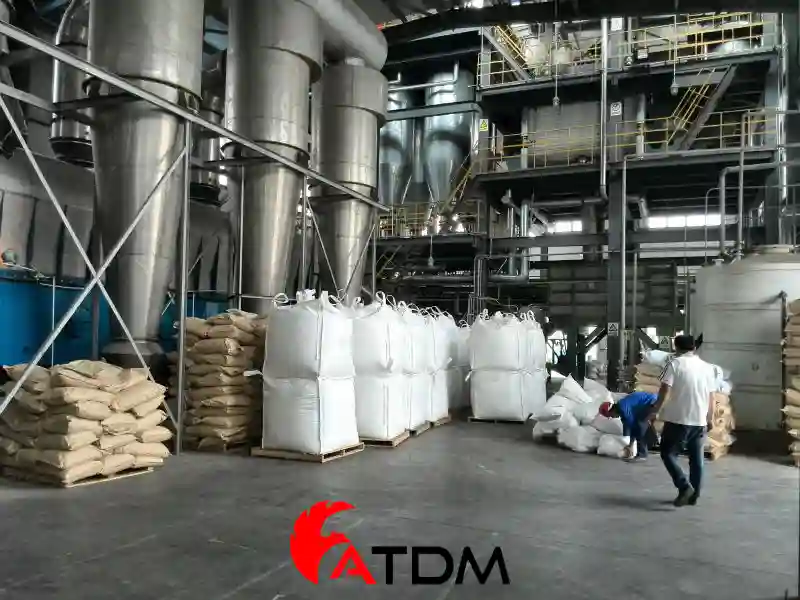
Drilling starch is a natural, starch-derived additive used in water-based drilling fluids to reduce fluid loss and protect permeable formations during drilling. It works by forming a thin, low-permeability filter cake that limits filtrate invasion into the formation. Drilling contractors, mud engineers, and procurement teams rely on this material in oil & gas, water well, HDD, and geothermal projects where formation protection, cost efficiency, and environmental compatibility matter. When applied correctly, it improves drilling stability without complicating the mud system.
In practical drilling operations, fluid loss control remains one of the most critical challenges. Excessive filtrate invasion weakens formations, increases torque and drag, and raises the risk of stuck pipe. Starch-based additives address this issue through a simple but effective mechanism.
Once dispersed in a water-based mud system, hydrated starch particles migrate toward permeable zones. There, they seal micro-pores and fractures, creating a compact filter cake along the wellbore wall. This barrier slows fluid invasion while maintaining mud properties.
Table of Contents
ToggleUnlike many synthetic polymers, drilling starch reacts quickly and does not require complex activation conditions, which makes it popular in field operations where simplicity matters.
From field experience, starch-based filtration control additives perform best in low to moderate temperature wells and environmentally sensitive operations.
Typical applications include:
Surface and intermediate sections in oil & gas wells
Water well drilling in sand, gravel, and unconsolidated formations
Horizontal directional drilling (HDD) for utilities and pipelines
Mining and geotechnical drilling projects
Geothermal wells operating within moderate thermal limits
In these environments, drilling starch delivers reliable performance without the cost or complexity of high-end synthetic systems.
This additive does not replace the full mud design. Instead, it supports the system by improving specific performance areas.
Starch-based materials significantly reduce API fluid loss by sealing formation pores, helping maintain wellbore integrity.
They produce a thin, smooth, and easily removable filter cake, which improves casing, cementing, and completion efficiency.
When dosed correctly, drilling starch limits fluid loss without causing excessive viscosity increases or pump pressure spikes.
Reduced filtrate invasion helps prevent clay swelling and minimizes formation damage in water-sensitive zones.
Not all products behave the same in the field. Selection depends on temperature, salinity, and drilling objectives.
Minimal chemical modification
Suitable for shallow wells and freshwater systems
Lower thermal stability
Chemically treated for improved performance
Better resistance to salt and calcium
Common in oilfield drilling fluids
Engineered for higher bottom-hole temperatures
Often combined with PAC or other polymers
Used when standard grades degrade too quickly
Experienced mud engineers select the grade based on lab testing and local formation behavior rather than price alone.
A common buyer question is whether drilling starch works in all conditions. In reality, it has clear performance limits.
Typical boundaries include:
Temperature: Effective up to approximately 90–120°C, depending on modification
Salinity: Moderate tolerance; performance drops in saturated brines
Biological stability: Natural materials may degrade without biocide control
For hotter or highly saline wells, operators usually blend starch with PAC, CMC, or synthetic polymers to extend performance.
From a formulation standpoint, drilling starch integrates well with most standard water-based mud systems when mixed correctly.
It remains compatible with:
Bentonite and pre-hydrated clays
PAC (low and regular viscosity)
CMC polymers
Xanthan gum for rheology control
Standard pH adjusters and biocides
Poor mixing practices, not the material itself, cause most field problems. Proper shear and controlled addition prevent lumping and uneven hydration.
Dosage depends on formation permeability and mud design, but field-tested ranges are well established.
Common usage rates:
2–10 lb/bbl for standard fluid loss control
Higher concentrations in highly permeable zones
Operational handling tips:
Add slowly through a hopper to prevent fish-eyes
Maintain stable pH for consistent hydration
Use biocide during extended drilling intervals
Store bags in dry, ventilated conditions
Good handling often determines success more than small formulation changes.
Price matters, but consistency matters more. Variations in quality directly affect drilling performance.
Key specifications buyers should request include:
| Parameter | Why It Matters |
|---|---|
| Moisture content | Affects storage and hydration |
| Particle size distribution | Controls dispersion and sealing |
| API fluid loss test data | Confirms performance |
| Thermal stability range | Defines operating limits |
| Batch consistency | Reduces field variability |
ATDM supplies starch-based drilling additives with controlled quality parameters and documented test results suitable for oilfield use.
Many operators choose drilling starch because it balances performance with environmental responsibility.
Key advantages include:
Plant-based and biodegradable composition
Lower environmental impact than synthetic polymers
Easier disposal in water well and HDD projects
Reduced regulatory challenges in sensitive regions
This balance explains why starch remains widely used despite the availability of advanced synthetic alternatives.
Can this additive replace PAC or CMC?
No. It complements them. Starch primarily controls filtration, while PAC and CMC often support viscosity and thermal stability.
Is it suitable for oil-based muds?
No. Starch-derived products are designed exclusively for water-based systems.
Does overdosing cause problems?
Yes. Excessive concentrations can increase viscosity and create thick filter cakes.
Is cheaper material acceptable?
Not always. Inconsistent quality leads to unpredictable mud behavior and higher operational risk.
This additive works best when:
Wells operate within moderate temperature limits
Environmental compliance is important
Cost efficiency is a priority
Water-based drilling fluids dominate
It becomes less suitable when:
Bottom-hole temperatures exceed stability limits
Extremely saline systems dominate
Long static periods increase biodegradation risk
Understanding these boundaries helps engineers design safer and more predictable drilling programs.
Drilling starch remains a practical and proven fluid loss control solution when used under the right conditions. It protects formations, stabilizes drilling fluids, and supports environmentally responsible operations without unnecessary complexity.
Before purchasing, review technical specifications, confirm temperature and salinity limits, and ensure compatibility with your mud system. For projects that require consistent quality and documented performance, working with experienced suppliers such as ATDM reduces operational uncertainty.
The next step is to review detailed specifications and lab data to confirm alignment with your drilling conditions and performance expectations.